
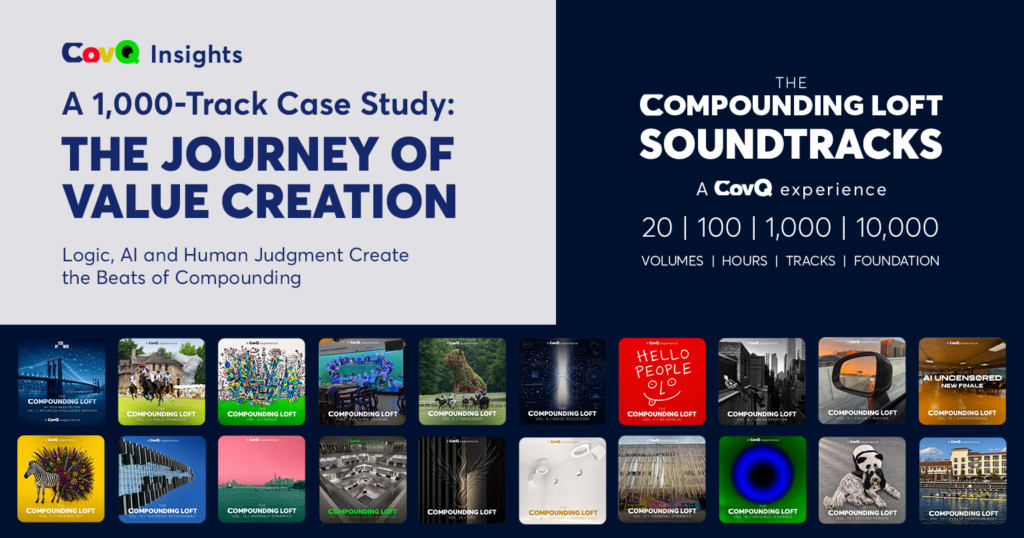
Logic, AI and Human Judgment Create the Beats of Compounding
THE COMPOUNDING LOFT SOUNDTRACKS
20 | 100 | 1000 | 10000
VOLUMES | HOURS | TRACKS | FOUNDATION
A CovQ experience
New York City, September 2026
FOREWORD
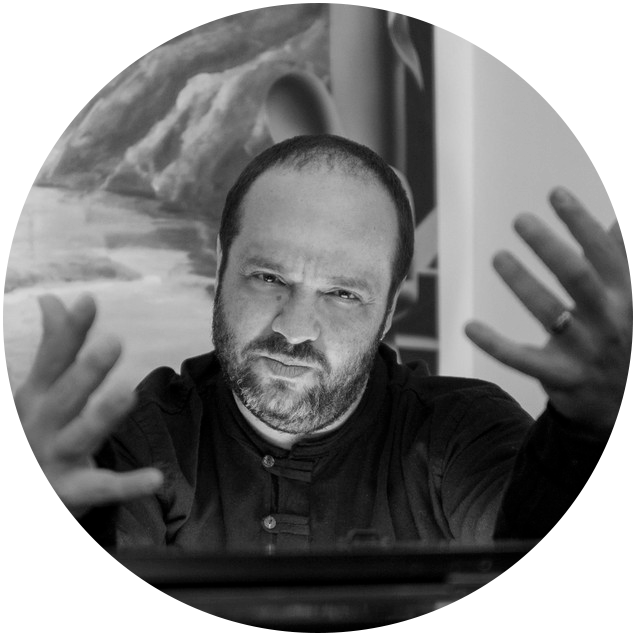
Gene Pritsker
Composer, guitarist and orchestrator
Photo by Alexander von Busch & Kirill Simakov
Gene Pritsker is a New York-based composer who has written more than 1,000 works. Described by The New York Times as “audacious” and “multitalented,” he co-founded the Grammy-nominated Absolute Ensemble and founded Sound Liberation. His orchestration and additional-music credits include Cloud Atlas, The Matrix Resurrections, Babylon Berlin and Sense8. His music has been performed by leading ensembles worldwide, including the Berlin Philharmonic, Brooklyn Philharmonic and MDR Symphony Orchestra.
FOREWORD
I am a composer who thinks in sound.
For me, musical ideas are never only notes. They have rhythm, density, color, movement, tension, silence and direction. Some ideas accelerate while some need space. Some collide with one another. Others only reveal their meaning because of what came before them. Sometimes the most important decision in a composition is not what to add, but what to leave out.
A composer does not simply choose sounds, but chooses relationships between sounds. This is one of the reasons I find The Compounding Loft Soundtracks so fascinating. At first, 1,000 tracks might sound like an enormous collection of music. But the achievement of this project is not simply the number of recordings. It is the architecture of the relationships between them: twenty volumes, twenty themes, more than one hundred hours of music, and an enormous number of decisions about what belongs, what does not, and what should happen next.
The individual recordings are important, but their meaning can change through context. A track can take on a different character depending on what comes before it, what follows it, and where it sits within the larger journey. The report describes this distinction well: selection asks whether a track belongs, while sequencing asks where it belongs and what becomes possible before and after it.
This is also where I recognize the creative process of composition. Every finished composition contains a vast number of decisions that never become visible. Notes come out, sections get rewritten, a tempo shifts, and sometimes a whole idea is dropped. The discarded material is not necessarily wasted; in fact, it teaches us something about the work.
Here, rejection actually becomes information: accepted tracks, rejected possibilities, substitutions, corrections and ordering decisions become memory that can influence what comes next.
The role of artificial intelligence is particularly interesting in this process. AI can expand the field of discovery, compare enormous numbers of possibilities, retain context and reveal relationships that might otherwise remain hidden. But the project does not present AI as a replacement for the human creative process. Human judgment remains responsible for purpose, interpretation, quality, sequence and consequence.
The machine can open many doors; nevertheless, the human still has to decide which rooms are worth entering and what to do once inside.
Ultimately, The Compounding Loft Soundtracks reflects something I have always believed about making music: meaning does not exist only inside individual sounds. It emerges through relationships, accumulated decisions and the journey from one moment to the next.
Perhaps that is what makes this project most interesting to me as a composer. It treats music not simply as an answer, but as a way of thinking, connecting, remembering and continuing the conversation.
And that conversation, like music itself, is never really finished.
Executive summary
The Compounding Loft Soundtracks began with a practical question: what should value creation sound like?
The first answer was a soundtrack for a CovQ environment. The completed answer is a 20-volume, 1,000-track and approximately 100-hour body of work that translates intelligence, principles, context and themes of value creation into music. It is a consumer experience, an applied experiment in human and artificial intelligence, and a demonstration of how accumulated judgment can become reusable intelligence. The project’s defining scale can therefore be expressed as 20 | 100 | 1000 | 10000: volumes, hours, tracks and more than 10,000 words documenting the conceptual foundation beneath the experience.
The work cannot be understood as 1,000 isolated recommendations. A track was never selected only because it was good, appropriate to a theme, or similar to something previously accepted. It had to perform a function inside a volume. Its title, lyrics, rhythm, instrumentation, cultural context, familiarity, surprise and position in the sequence could all matter. The track before it changed how it was heard. The track after it changed what it meant. Each volume developed its own internal logic while also inheriting the decisions, standards and memory of the volumes that preceded it.
This is why the project is more than curation and different from algorithmic recommendation. Conventional recommendation systems optimize the likelihood that an individual will engage with the next item. The Compounding Loft Soundtracks were designed around intentional value logic and long-form flow. They move between recognition and discovery, voice and abstraction, propulsion and reflection, accessibility and productive tension. The aim is not to predict taste perfectly. It is to create conditions in which attention expands, connections form and familiar ideas can be encountered differently.
Human judgment and AI played distinct, complementary roles. AI expanded the search space, compared possibilities, preserved context, surfaced unexpected relationships and accelerated iteration. Human judgment established the ambition, interpreted the themes, rejected technically suitable but insufficient music, made final selections and shaped the sequences. The system improved because acceptance, rejection, substitution and ordering all became information.
Volume 10 provided the first decisive proof. The 450 selections from Volumes 1 through 9 were treated as a corpus. AI inferred their latent musical DNA and generated an initial set of 50 tracks by 50 artists not previously represented. What had required extensive iterative work reached a high-quality starting point at near-zero incremental production cost. Past judgment had become an asset that could perform part of the next task.
Volumes 11 through 20 then moved beyond that proof, testing whether the intelligence could remain coherent as it passed through scale, distress, anomaly, an explicit system of 60 value drivers, financial discipline, contrasting perspectives, collective celebration, invisible sources of leverage, augmentation and continued evolution. The result was not convergence toward a safe formula. The range widened. Continuity survived because the system had learned principles rather than merely copying surface characteristics.
The completed project reveals a broader progression:
What began as collaboration accumulated into a body of work, compounded across 20 volumes, expanded in scope, became a system, and continues to evolve.
Its business relevance is direct and emerges from the work itself. Organizations make consequential judgments every day, yet much of the reasoning behind them disappears after the decision. This work demonstrates another possibility: preserve decisions with enough context, including what was rejected and why, and previous work can improve the quality, speed and range of what comes next. AI becomes most valuable not when it replaces judgment, but when it helps judgment accumulate, travel and compound.
The Compounding Loft Soundtracks are both a completed creative work and a case study in how logic, AI, and human judgment can transform extensive inputs into a coherent, evolving system.
What is expressed here through music and its related creative work applies equally to any field where data, people, and direction come together.
The innovation
The innovation is not any individual playlist, track, cover or use of AI. It is the architecture that makes them cumulative. The Compounding Loft Soundtracks are not the first meeting of music and business, music and technology, or human creativity and artificial intelligence. Their innovation lies in the system those elements form together.
Twenty value-creation themes create an intellectual architecture rather than a collection of moods. One thousand existing recordings are organized into 20 long-form experiences in which titles, lyrics, rhythm, instrumentation, cultural context and sequence all carry meaning. Twenty covers provide a parallel visual narrative.Logic, AI and human judgment operate across the complete process, while the decisions and learning accumulated through that process become reusable intelligence for what follows. The finished work can then function not only as a listening experience, but as a cultural instrument for teams and organizations.
Based on conversations with musicians, composers and professors, we have not encountered another work that connects value-creation principles, human and artificial intelligence, long-form musical curation, sequencing, visual identity and organizational application through one cumulative logic at this scale. That is not a claim that every component is unprecedented. The original contribution is architectural: the parts are joined and developed across 100 hours as a single system.
The project also departs from the dominant model of AI-enabled media. It does not foreground synthetic production or use AI to imitate a recognizable style. It applies AI to discovery, contextual memory, comparison and the activation of accumulated human judgment. The recordings remain the work of their artists. The new work lies in the conceptual structure, selection, sequence, interpretation and relationships constructed across them.
This makes the project simultaneously cultural and operational. It can be experienced without explanation, studied as a human-AI case, navigated as a set of value-creation themes, or used to create a shared organizational language. Its innovation is therefore not a technical feature or a single creative gesture. It is a new form: a cumulative intelligence system expressed through music and designed to be heard.
PERSPECTIVE

Alex Clemente
Former Managing Director, Harvard Business Review Analytic Services
Alex Clemente served at Harvard Business Review Analytic Services from 2006 to 2026, including 2010 to 2026 as managing director.
Perspective forthcoming
From soundtrack to system
The project originated with The Compounding Loft, a CovQ environment that brings operators, capital allocators and creative minds together around intelligence, strategy, execution and enterprise value creation. The inaugural Compounding Loft experience during New York Tech Week centered on the theme “Return on Intelligence Deployed,” which became the title and conceptual foundation of Volume 1. The volume was created as the soundtrack for the panel and broader experience. Andreessen Horowitz, a16z, the organizer of Tech Week, selected the event as one of the top ten to attend from a program of more than 1,500 events. The musical brief was demanding from the outset: sophisticated but not inaccessible, surprising but not arbitrary, global without becoming touristic, and capable of sustaining attention over several hours.
Those requirements created a productive tension. Familiar music could provide memory and recognition, but discovery had to remain central. A title or lyric could express a principle precisely, but conceptual fit never excused mediocre music. A rare or difficult track could earn its place, but obscurity itself had no value. Every choice had to work both independently and relationally.
The method therefore developed on several levels at once:
· Track level: musical quality, relevance, title, lyric, rhythm, instrumentation and emotional force.
· Sequence level: entrances, exits, contrast, recovery, escalation, surprise, recurrence and narrative motion.
· Volume level: a distinct principle and identity sustained across approximately five hours.
· Series level: continuity across genres, periods, cultures, technologies and 20 separate concepts.
· Logic level: CovQ’s underlying value drivers informed the work throughout, connecting selections and relationships as a neural system rather than treating them as isolated categories.
· System level: accumulated human decisions becoming context for subsequent AI-supported work.
· Human level: taste, intuition, emotional response and an ear for distinctive voices and memorable melodies remained decisive, even as AI expanded the field of possibility.
The one-to-one relationship between a track and a principle matters, but it is only the smallest unit. Meaning emerges through flow. A restrained piece can make the following explosion feel larger. A familiar song can stabilize an unfamiliar passage. A lyric can reinterpret an instrumental heard immediately before it. Repetition can signal coherence or complacency depending on where it occurs. Silence, density, duration and contrast become structural materials.
The result is better described as experience architecture through music: individual works remain intact, while selection and sequence create an additional layer of meaning.
The themes are the architecture
The 20 titles are not labels applied after the music was selected. They are the conceptual architecture of the work. Each identifies a principle, capability, tension or force that shapes how value is created. The volumes investigate those themes through titles, lyrics, rhythm, instrumentation, cultural context, visual identity and, above all, sequence. A theme establishes the field of inquiry; the music tests its range, contradictions and emotional reality.
Their order is equally important. The journey begins with intelligence becoming action, then moves through motion, networks, systems, ownership, discernment, human distinctiveness, coordination and execution. Compounding marks the point at which accumulated judgment becomes productive. The second half then tests that intelligence under conditions of scale, distress and anomaly; maps it against a structured system of value drivers; examines finance and perspective; and moves through collective energy, invisible advantage and technological augmentation toward evolution.
Together, the themes express a view of value creation as a living, connected and cumulative process. No single principle is sufficient. Intelligence without deployment remains potential. Vision without motion remains intention. Ownership without orchestration can fragment effort. Scale without discernment can amplify noise. Technology without human judgment can optimize the wrong objective. Evolution without memory repeats rather than compounds.
The themes therefore connect the cultural experience to the business context without turning the music into instruction. They make strategy, execution and enterprise value perceptible through tension, movement, voice, contrast and time. The listener can enter through sound, circumstance or taste, but the complete sequence reveals a larger proposition: value is created through relationships among principles, not through isolated capabilities.
What the system learned
Judgment is data, but not merely data
The most valuable corpus was not only the accepted music. It included rejected tracks, replaced tracks, alternate versions, debates about lyrics, concerns about audience and context, and decisions about where a piece could or could not sit. These choices captured standards that no genre label or audio feature could adequately express.
Rejection carries intelligence
A recommendation that was musically excellent could still be wrong because it was too obvious, too literal, too sentimental, too culturally convenient, too short to develop, too long without earning its duration, or too similar to an earlier function. Recording why an option failed improved later searches. The negative space around the final collection became part of its intelligence.
Sequence is a form of reasoning
Ordering was not an administrative step after selection. It was composition at the level of experience. Sequences managed energy and attention while generating relationships that did not exist inside any single recording. The system did not simply ask, “What belongs?” It asked, “What becomes possible here, after this, and before that?”
Principles travel farther than formulas
If the system had learned a fixed sound, the later volumes would have become repetitive. Instead, it learned a preference for discovery with anchors, intelligence with pleasure, complexity with movement, surprise with purpose, and quality above conceptual convenience. Those principles could survive major changes in genre, geography, intensity and form.
A musical voice can take on different roles across the series. Henrik Schwarz’s “Walk Music” appears in Vol. 2, Polo Dynamics. Nhii appears with Sarkis Mikael on “Oudiology” in Vol. 5, Ownership, and with Atsushi Asada on “Tudo Vale a Pena” in Vol. 6, Noise Reduction. Each track earns its place through its role in the volume’s theme and sequence. The artists provide continuity, while the changing context gives each appearance a different role.
Human judgment moves upward
As AI became better at discovery and contextual comparison, human effort did not disappear. It shifted toward the work with the highest leverage: defining the question, setting standards, reading context, detecting false equivalence, protecting distinctiveness and deciding when the sequence was complete.
How the work was built
The project developed through a repeatable method rather than a single act of recommendation. The method changed as the corpus grew, but seven practices remained consistent.
1. Establish the inquiry. Each volume began with a value-creation principle, business context or organizational tension. The theme defined a field to investigate rather than a phrase to illustrate literally.
2. Expand the search field. AI supported broad exploration across artists, scenes, periods, geographies, related recordings and less obvious musical lineages. Familiar anchors remained useful, but discovery was a requirement.
3. Evaluate the whole track. Titles could create an initial connection, but lyrics, rhythm, instrumentation, duration, cultural context and emotional force determined whether that connection held.
4. Reject and refine. Tracks were removed when they were too obvious, too literal, too familiar, culturally convenient, musically insufficient or redundant with a function already performed elsewhere. Rejection informed the next search.
5. Sequence relationally. Selection answered whether a track belonged. Sequencing answered where it belonged, what it changed and what became possible before and after it.
6. Validate the experience. The complete volume had to sustain attention over several hours, retain its own identity, remain available across the intended listening platforms and still feel part of the larger series.
7. Retain the context. Accepted tracks, rejected options, substitutions, corrections and ordering decisions became memory for subsequent work.
The method is clearest in the transition to Volume 10. The 450 accepted tracks from Volumes 1 through 9 became a corpus. AI was asked to infer the selection logic and search outside that corpus without genre quotas, geographic mandates or a predetermined new theme. The first result contained 50 tracks by 50 artists not previously represented. It was retained uncensored and unchanged. Human judgment confirmed that the selections were appropriate, and the proposed sequence was intentionally accepted as delivered rather than reordered. The earlier work had become productive context for the next work.
The documented process and the finished playlists provide different kinds of evidence. The process record establishes how the work was produced. The published sequences make the resulting choices available for both listening and examination. Any interpretation offered in this report explains why a track was selected or positioned within the project. It does not claim to explain what the artist intended the work to mean.
Sequence as argument
A sequence can make an argument without reducing music to a literal message. Openings establish a proposition, endings reveal what the volume ultimately does with it, and the intervening tracks create the movement between them. The collection contains many such arcs. Seven have been selected here as examples to make that structure visible.
Vol. 2 | Polo Dynamics
The volume opens with Gene Pritsker’s “Brahms Infinity,” placing a classical reference inside a contemporary, forward-moving frame. It closes with Franz Hackl’s “Snowball Earth,” expanding the field from tactical movement to planetary scale. Between them, polo becomes a model for value creation through intelligence, timing, coordination, horsepower and adaptation under constantly changing conditions. Underlying galloping sounds recur throughout the journey, keeping the physical rhythm and forward motion of polo present.
Vol. 6 | Noise Reduction
The volume opens with “Its No Illusion” by Zac Love and closes with “Köln, January 24, 1975, Part I” by Keith Jarrett. The opening immediately challenges the listener to distinguish perception from reality. The 26-minute closing performance requires patience, concentration and attention to order emerging in real time. Noise reduction arrives not as emptiness, but as the capacity to remain with a developing intelligence long enough to perceive its structure. In business terms, informed judgment replaces informational reaction.
Vol. 10 | Compounding | AI Uncensored
“Io” by Dawn of Midi initiates the volume with a precise interlocking pulse. “Hidden Tableau (excerpt)” by Oren Ambarchi closes it with a partial view of a larger concealed composition. Between them sits the first volume generated from the accumulated musical DNA of the previous 450 selections. The arc is therefore both musical and methodological: a system begins in disciplined repetition and ends by revealing that accumulated intelligence contains more possibility than any single output can expose.
Vol. 11 | Maximalism
“The Score” by Emerson, Lake & Powell announces scale, theatricality and ambition. Near the end, Boredoms’ 40-minute “Super Roots #9” pushes duration, repetition and collective intensity toward saturation. The final track is Janis Joplin’s 1:47 a cappella “Mercedes Benz.” After monumental density, one unaccompanied voice turns abundance into satire. The sequence does not simply celebrate more; it tests where magnitude becomes desire, absurdity or excess without purpose.
Vol. 15 | CFO
The opening, “Jan 18” by Steve Coleman and Five Elements, begins with structured intelligence attached to a precise point in time. The closing, “Aguas da Amazonia: Amazon River” by Philip Glass and Uakti, unfolds as movement, recurrence and interdependence. Read within the volume’s business context, the arc travels from the discipline of a defined reporting moment toward the continuous flow of a living system. It mirrors the expanding CFO mandate: control remains essential, but value must be understood, built and directed across time.
To give Vol. 15 a clear CFO direction, we added a strict criterion based on artist origin. Every track had to come from one of the eight countries projected by Goldman Sachs Research to have the largest economies by GDP in 2050: China, the United States, India, Indonesia, Germany, Japan, the United Kingdom and Brazil. The resulting selection gave the volume a musical view of the future global economy.
Vol. 18 | Invisible Leverage
The volume opens with “Let X=X – Live” by Laurie Anderson with Sex Mob and closes with Anderson’s original studio version, “Let X=X.” This framing creates a rare double exception within the 1,000-track system: the same composition appears twice in one volume, and the opening performance is one of only two live recordings in the complete collection. The live version makes collaboration, interpretation and collective presence immediately audible; the studio version returns to the work’s original architecture. Between them, Invisible Leverage explores the forces that alter outcomes without changing the underlying equation. The composition remains recognizable, but context, contributors and performance transform its effect. What appears equal in principle is never identical in experience.
Vol. 20 | Evolve Compoundedly
The complete journey begins in Vol. 1 with its first track, Ami Taf Ra’s “Speak To Us (Intro),” an invocation for guidance, wisdom and truth. Twenty volumes later, the final volume opens with “Antes Que Eu Me Esqueça” by Tocaia Trio, meaning “Before I Forget.” The track also accompanied CovQ’s video summaries of the summer polo season, including the large digital video billboard commercial “What if you knew your corporate IQ?” beside the Greenwich Polo Club scoreboard. Music, moving image, physical setting and business context came together as an integrated, immersive experience around value creation. Vol. 20 closes with the thousandth track, Fishmans’ 35-minute “LONG SEASON.” The architecture therefore begins with a request to speak, enters its final movement through memory and ends in duration rather than a full stop.
Fishmans, the Japanese experimental band led by Shinji Sato, developed a musical language that moved through dub, dream pop, psychedelia, ambient texture and improvisation. Released in 1996, “LONG SEASON” expanded the band’s earlier six-minute “Season” into a single album-length composition. Recurring piano, bass and vocal motifs disappear, transform and return. Multiple sections and contributors become one continuous architecture. The piece remains recognizable while continually becoming something new.
That makes “LONG SEASON” more than a closing selection. It makes the logic of the entire project audible. The work develops through accumulation rather than replacement. Earlier material returns with altered meaning. Repetition generates memory rather than stasis. Its title transforms a bounded season into an extended condition, and the band’s recognition continued to compound internationally long after the original release. As the final work of Evolve Compoundedly, it expresses continuity with change, memory with motion and accumulated intelligence becoming the capacity to evolve. The 1,000-track journey ends without closing. It continues as a long season.
These seven arcs are not ranked as the best openings or closings. They are selected because they make the relational logic legible. A title matters; its placement changes what it can mean.
The Journey in 26 Titles
1. Speak To Us (Intro) | Ami Taf Ra
2. C.R.E.A.M. (Cash Rules Everything Around Me) | Wu-Tang Clan
3. Innerbloom | RÜFÜS DU SOL
4. Pharaoh’s Dance | Miles Davis
5. Brahms Infinity | Gene Pritsker, Sound Liberation, Adriana Valdés, Charles Coleman, Imelda O’Reilly, Noizepunk and Franz Hackl
6. Les Fleurs | Minnie Riperton
7. Little Fluffy Clouds | The Orb
8. Poetenclub | Nina Hagen featuring Falco
9. Dashboard | Modest Mouse
10. Principles | Benoit & Sergio
11. Open Your Eyes, You Can Fly | Flora Purim
12. Galloping Horses | Hai-Huai Huang, Yang Wei and Daxun Zhang
13. Fame | Irene Cara
14. Totality | Natural Information Society and Bitchin Bajas
15. The Score | Fugees
16. It’s Bad You Know | R.L. Burnside
17. Space Is Only Noise If You Can See | Nicolas Jaar
18. Stand Tall | Childish Gambino
19. Synthesia | Mr. Krime
20. A Day in the Life | The Beatles, reinterpreted by Milton Nascimento and Esperanza Spalding
21. The Dance of Lions | ADG7
22. Vou Festejar | Beth Carvalho
23. Let X=X | Laurie Anderson
24. Panopticom (Bright-Side Mix) | Peter Gabriel
25. Emergence | The Messthetics and James Brandon Lewis
26. LONG SEASON | Fishmans
Together, these 26 titles transform individual selections into a single narrative of intelligence encountering the world, learning through experience and emerging with the capacity to evolve compoundedly.
A Deliberate Recurrence: One Composition, Two Contexts
“A Day in the Life” appears twice across the Soundtracks, a deliberate exception to the project’s avoidance of repetition.
In Vol. 3 | Nodes, the interpretation by Milton Nascimento and Esperanza Spalding connects artists, generations, cultures and musical languages. It demonstrates how meaning emerges through relationships between distinct nodes rather than from isolated elements alone.
The original recording by The Beatles later opens Vol. 16 | Context + Perspectives. John Lennon’s detached reading of newspaper fragments involving a fatal crash, a war film and thousands of potholes collides with Paul McCartney’s brisk morning routine, which slips into a dream. Public events and private experience, distant tragedy and everyday life, gravity and absurdity coexist within one composition.
Across the two volumes, the interpretations reinforce each other. Nodes reveals how meaning is created through connection. Context + Perspectives shows how reality changes according to position, attention and interpretation. The recurrence makes the principle audible: the same underlying work can acquire new meaning through different people, cultures, moments and contexts.
Discovery as research
The search process repeatedly moved beyond individual recommendations into musical ecosystems. Certain business themes could not be expressed adequately through familiar catalogues or surface-level similarity. They required exploration of scenes, artistic relationships, performance traditions and cultural lineages. Five deep dives show how discovery became a form of research.
Japanese experimental and avant-garde ecosystems
The exploration of Japanese music crossed psychedelic expansion, experimental voice, polyrhythm, electronic modernism, reconstructed folk traditions and large-ensemble improvisation. Kikagaku Moyo’s “Meu Mar,” OOIOO’s “On Mani,” Hatis Noit’s “Angelus Novus,” Geinoh Yamashirogumi’s “Ecophony Rinne 4. Reincarnation” and Boredoms’ “Super Roots #9” occupy different parts of that field. Later discoveries, including Minyo Crusaders, Takuya Kuroda, Ajate and SHIBUSASHIRAZU, widened it further. The purpose was not geographic representation. The depth of the ecosystem became evident in the number of artists able to meet the project’s demanding combination of originality, musical strength, surprise, collective coordination and sustained coherence. Japan offered many distinct models of disciplined experimentation and productive extremity.
Brazilian experimentation and carnival intelligence
Brazilian music became a recurring source of movement, social intelligence and reinvention. Hermeto Pascoal’s expansive, boundary-crossing approach provided a central model, joining technical mastery, play, improvisation and the transformation of everyday sound. In Carnival Dynamics, Jorge Ben Jor’s “Take It Easy My Brother Charles,” Azymuth’s “Jazz Carnival,” Bixiga 70’s “Ventania,” Metá Metá’s “Obá Iná” and BaianaSystem’s “Capim Guiné” connect popular recognition with experimental form. The closing movement continues through samba-enredo traditions and Margareth Menezes’ “Alegria Da Cidade.” Carnival emerges as an operating system for coordination: individual expression, shared rhythm, heritage, improvisation and participation remain active at once.
Global procession brass and festival systems
The research also connected traditions that are often catalogued separately but perform related social functions. Ebony Steel Band’s “The Model,” the Dirty Dozen Brass Band’s “Do It Fluid,” The Wild Magnolias’ “Handa Wanda,” BP Renegades Steel Orchestra’s “Pan in ‘A’ Minor” and “IzWE” by Kes, Etienne Charles and the Laventille Riddim Section organize attention through rhythm, movement and collective presence. Heard together, they show how communities coordinate energy without centralizing every action.
Systems music and post-minimalist groove
Volume 10 begins with an unusually coherent field of systems-based music: “Io” by Dawn of Midi, “Modul 42” by Nik Bärtsch, “Fanfare for Effective Freedom” by Horse Lords, “TNT” by Tortoise and “Hopopono” by GoGo Penguin. Repetition does not reproduce an unchanged unit. Small variations alter the whole, independent parts lock together, and disciplined constraints generate momentum. The ecosystem gave the idea of compounding a structural musical form rather than a lyrical explanation.
Contemporary collective and spiritual avant-garde jazz
The later volumes draw on a wide network of contemporary improvisers and ensembles. “Constellation” by Szun Waves, “Lope” by Ill Considered, “Encantados” by Amaro Freitas with Hamid Drake, Shabaka and Aniel Someillan, “Emergence” by The Messthetics with James Brandon Lewis, and “Supersonic” by Gard Nilssen’s Supersonic Orchestra represent different approaches to collective invention. The shared relevance lies in how individual intelligence operates inside an evolving group structure: leadership moves, listening becomes productive and form emerges through interaction.
The ecosystem deep dives explain why the collection could grow in range without becoming arbitrary. AI increased the number and diversity of paths that could be explored. Human judgment decided which paths carried meaning for the theme and which discoveries could survive inside the sequence.
When an intelligence architecture becomes audible
Vol. 14 | IQ (3)60 Neuro Algorithm is the project’s most direct translation of a business intelligence architecture into music. Sixty tracks were selected in a fixed sequence, corresponding individually to CovQ’s 60 core value drivers. Each track had to establish a meaningful relationship with one driver while remaining part of a coherent, continuous listening experience.
The proprietary value drivers, their order and their individual track relationships are not reproduced here. A selective sample of published titles demonstrates the conceptual range carried by the musical architecture:
· “Everything Connected” — Jon Hopkins
· “Our People” — Emma-Jean Thackray
· “Take A Look (At Yourself)” — Guru and Roy Ayers
· “Both Sides Now” — Joni Mitchell
· “Togetherness” — Ezra Collective
· “High Standards” — Kevin Yost and Peter Funk
· “Principles” — Benoit & Sergio
· “Control Shift” — GoGo Penguin
· “Communication” — Bobby Womack
· “Stand Tall” — Childish Gambino
These titles can provide answers, provoke questions and create food for thought. Their significance depends on the corresponding value driver, the music itself and their position within the 60-part sequence. A title may establish a direct relationship, while rhythm, lyrics, cultural context and musical character can complicate, deepen or even challenge it. The exercise turns a proprietary business taxonomy into an experiential system that can be heard, felt, remembered and discussed.
The complete 60-track and 60-driver mapping is part of CovQ’s working intelligence architecture. The public sample makes the method visible while preserving the proprietary relationships on which it is based.
Who returned among 1,083 artists?
Across 1,000 tracks, the series features 1,083 unique credited artists. The number exceeds the track count because collaborations and ensemble recordings frequently bring multiple artists together within a single track. Of these artists, 848 appear only once, 160 appear exactly twice and 75 appear three or more times.
The most recurring artists do not define the collection by genre. They reveal some of its strongest connective threads: improvisation, experimentation, orchestration, cultural range, collective performance and sustained musical development.
Across the 20 volumes, the following artists achieved the greatest presence by number of track placements. Cumulative playing time is used to distinguish artists with the same number of appearances.
| Rank | Artist | Track placements | Cumulative playing time |
| 1 | Hermeto Pascoal | 12 | 1:31:52 |
| 2 | Miles Davis (Electric) | 11 | 2:09:25 |
| 3 | Kamasi Washington | 10 | 1:35:59 |
| 4 | Floating Points | 7 | 0:57:47 |
| 5 | Theon Cross | 6 | 0:36:11 |
| 6 | SHIBUSASHIRAZU | 5 | 0:43:58 |
| 7 | Gene Pritsker | 5 | 0:31:11 |
| 8 | Laurie Anderson | 5 | 0:26:36 |
| 9 | Moor Mother | 5 | 0:21:22 |
| 10 | CAN | 4 | 0:38:01 |
Hermeto Pascoal achieved the highest frequency across the complete series, while Miles Davis (Electric) accounted for the greatest cumulative playing time. Kamasi Washington followed closely on both measures. Together with Floating Points, Theon Cross, SHIBUSASHIRAZU, Gene Pritsker, Laurie Anderson, Moor Mother and CAN, these artists became recurring points of connection across otherwise highly diverse volumes.
Their presence was not determined by quotas or predetermined representation. Each repeatedly met the project’s demands for musical quality, experimentation, scale, movement and relevance in different contexts. Recurrence emerged from the selections themselves.
The count includes credited collaborations and repeated tracks when they appear intentionally in different volumes. Recordings credited to Hermeto Pascoal Big Band are included under Hermeto Pascoal. Where artists have the same number of placements, cumulative playing time determines their order.
Track availability and displayed results may vary by country, region, platform updates, and changes made by Spotify, Apple Music, artists, or rights holders.
The visual journey
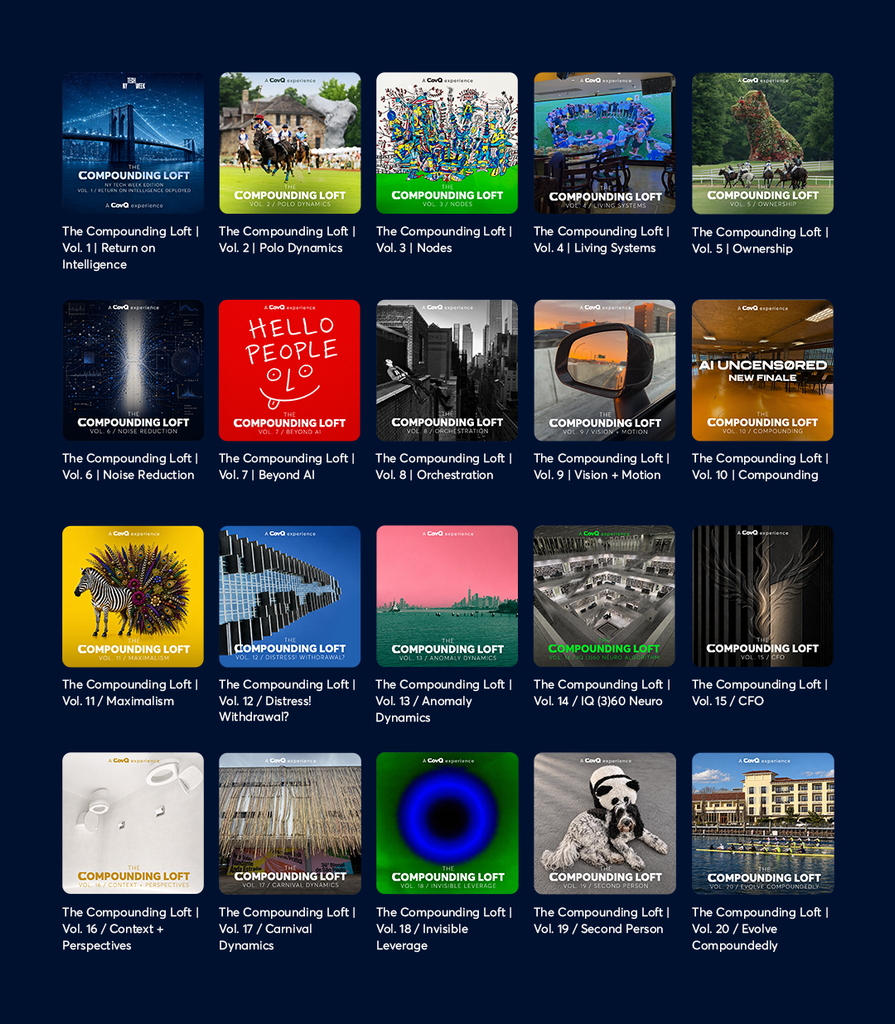
Twenty distinct identities within one visual and conceptual system.
The covers as a second intelligence layer
The covers do not merely present the music and are not decorative wrappers. They extend its ideas visually and form the a second intelligence layer that makes each volume’s principle visible before the first track begins. Across 20 editions, a consistent typographic structure establishes continuity while the image, color, location and degree of abstraction change. The repeated frame identifies one system; the changing visual field signals that each volume will investigate a different condition of value creation.
The visual method parallels the musical method. Some covers begin with documentary photography connected to an actual CovQ environment or event. Others use architecture, commissioned or existing artwork, found visual material, or AI-mediated imagery. Recognition alternates with ambiguity. Human gatherings sit beside abstract signals; controlled structures beside living forms; bright optimism beside instability and voids. The images do not explain the title literally. They open a field of interpretation and create expectations that the sequence can confirm, complicate or overturn.
The progression also carries meaning. The early covers move through bridges, sport, networks, human systems and signals. The middle expands into human creativity, orchestration, motion, AI, maximalism, distress and anomalies. The final group becomes increasingly architectural, perspectival and metaphysical before returning to people moving together. Seen in order, the covers trace the same journey as the music: from deployed intelligence through connected systems and accumulated judgment toward augmentation and evolution.
This gives the project three interdependent forms of expression: principle, music and visual identity. The theme defines the inquiry. The soundtrack develops through time. The cover concentrates it into a single encounter. None is a substitute for the others. Their alignment creates the complete experience, while their differences prevent the system from becoming illustrative or predictable.
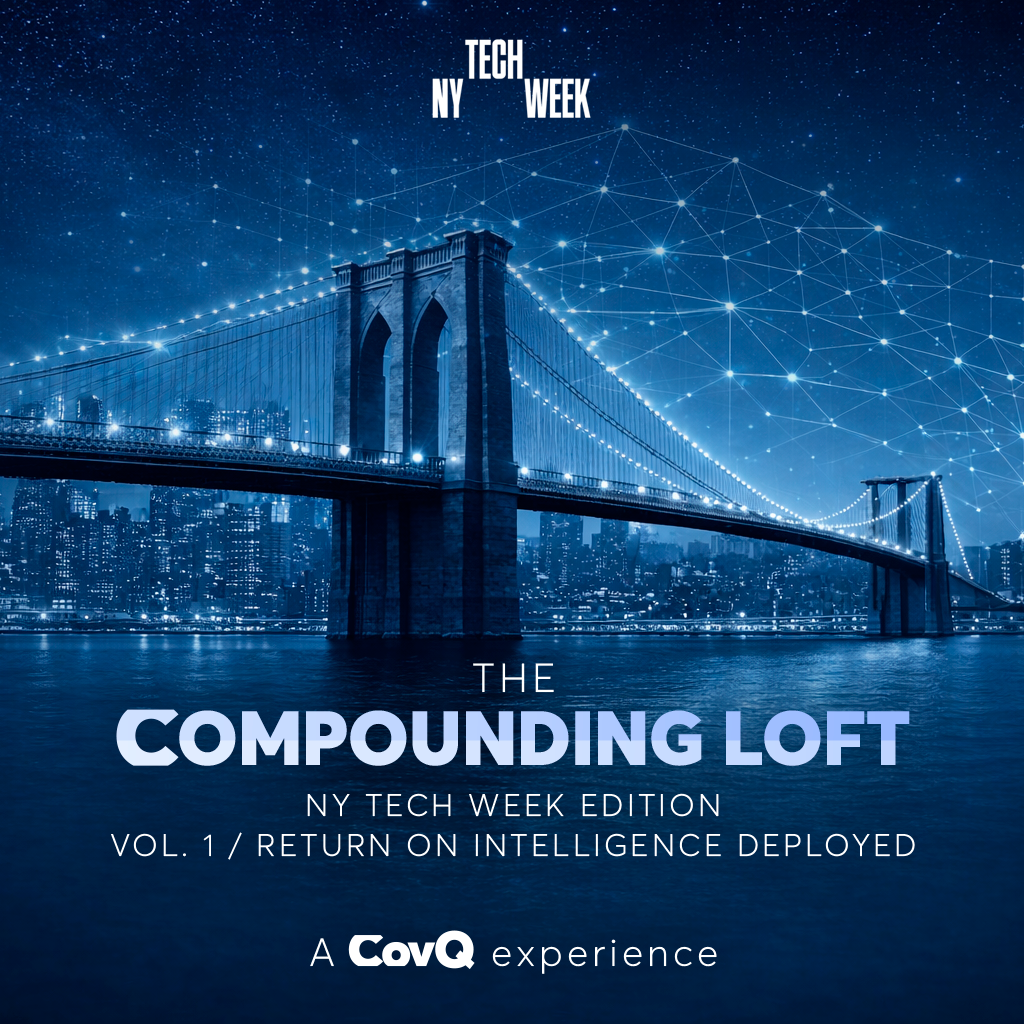
Vol. 1 | Return on Intelligence Deployed
The Brooklyn Bridge becomes both infrastructure and network: a recognizable New York landmark crossed by lines of connection. It establishes the founding movement from intelligence to deployment, locates the project in its NY Tech Week origin and reflects how The Compounding Loft began by bringing together people passionate about value creation and mission delivery.

Vol. 2 | Polo Dynamics
Players and horses move across the Greenwich field as Swiss-born artist Urs Fischer’s monumental artwork Clay #3 rises in the background. Few sports contain more variables. The documentary photograph brings together speed, position, coordination, anticipation and horsepower, while the sculpture adds a powerful sense of scale, form and physical presence. Photography courtesy of Greenwich Polo Club.
Vol. 3 | Nodes
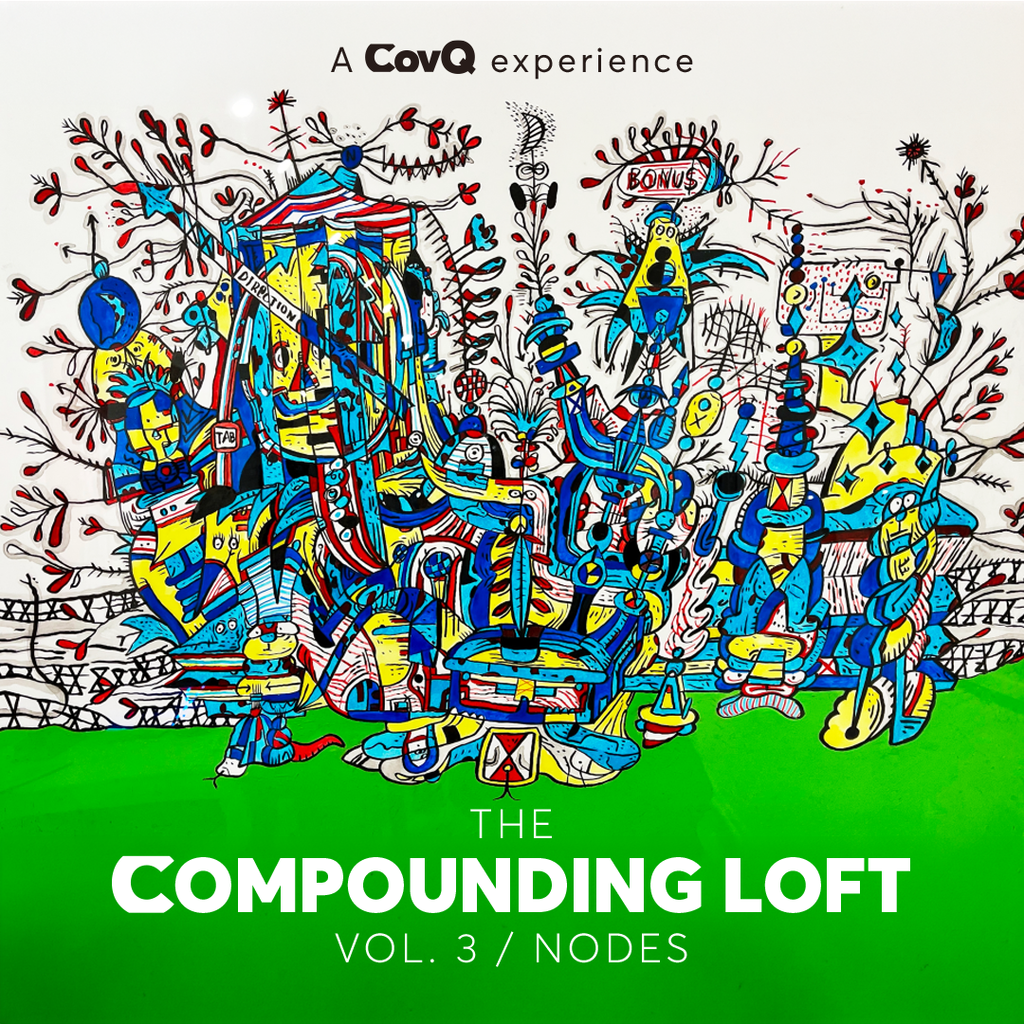
Jason MacLean’s densely connected world of figures, symbols, creatures and pathways makes relationship itself the subject. No single element controls the image; meaning emerges through the network. Artwork: Bonus Direction by Jason MacLean.

Vol. 4 | Living Systems
The U.S. Men’s National Soccer Team, gathered in a circle and seen through a screen, places coordinated human participation inside a mediated environment. The circular formation also evokes a roundtable, emphasizing communication, exchange and collective understanding. The image captures feedback, interdependence, shared purpose and adaptation. Living systems are simultaneously experienced, observed and shaped.

Vol. 5 | Ownership
Jeff Koons’s monumental floral sculpture Puppy, commissioned by Peter Brant and Stephanie Seymour for their Greenwich estate, overlooks polo players in motion. The image connects ownership with stewardship, cultivation and responsibility. What is owned must also be maintained, directed and carried forward. Photography courtesy of Greenwich Polo Club.
Vol. 6 | Noise Reduction
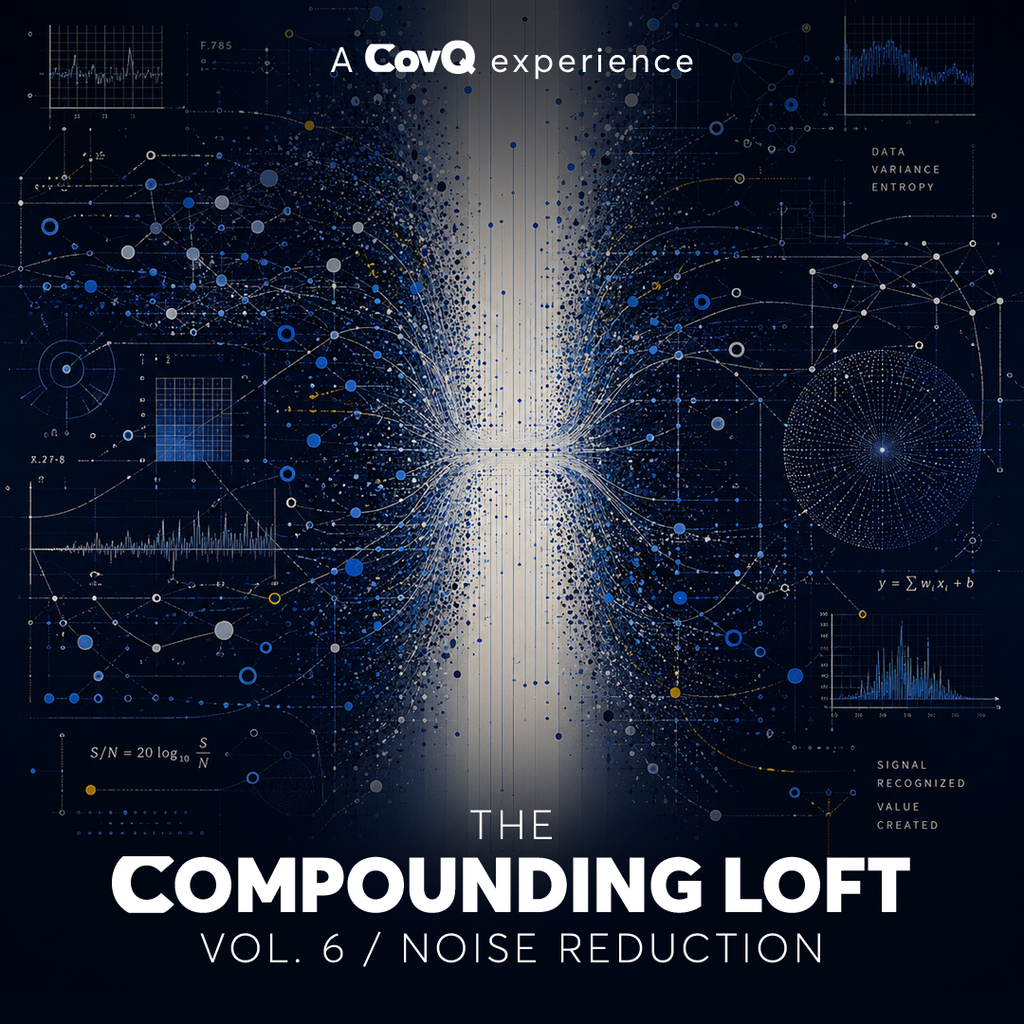
Eric Jiaju Lee’s visual field merges with CovQ’s technology and data model to form a concentrated stream. Complexity remains present, but attention is directed toward structure, pattern recognition, clarity and focus. Artwork: Implicate Order by Eric Jiaju Lee, merged with a CovQ illustration.
Vol. 7 | Beyond AI
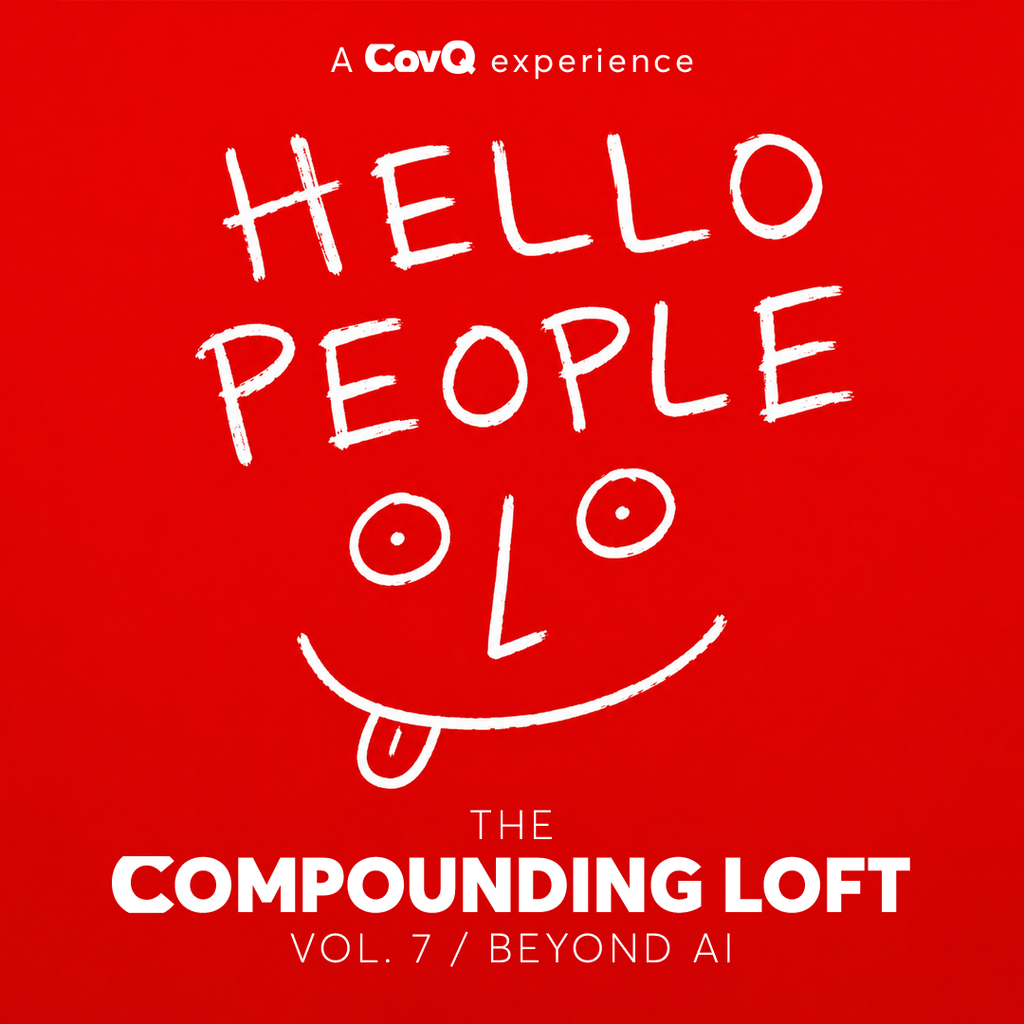
“Hello People” appears as an immediate handwritten greeting on an emphatic red field. The imperfect line, humor and open expression place humanity at the center of a technology-defined conversation. In a deliberate inversion, this distinctly human-looking image was fully AI-generated.
Vol. 8 | Orchestration
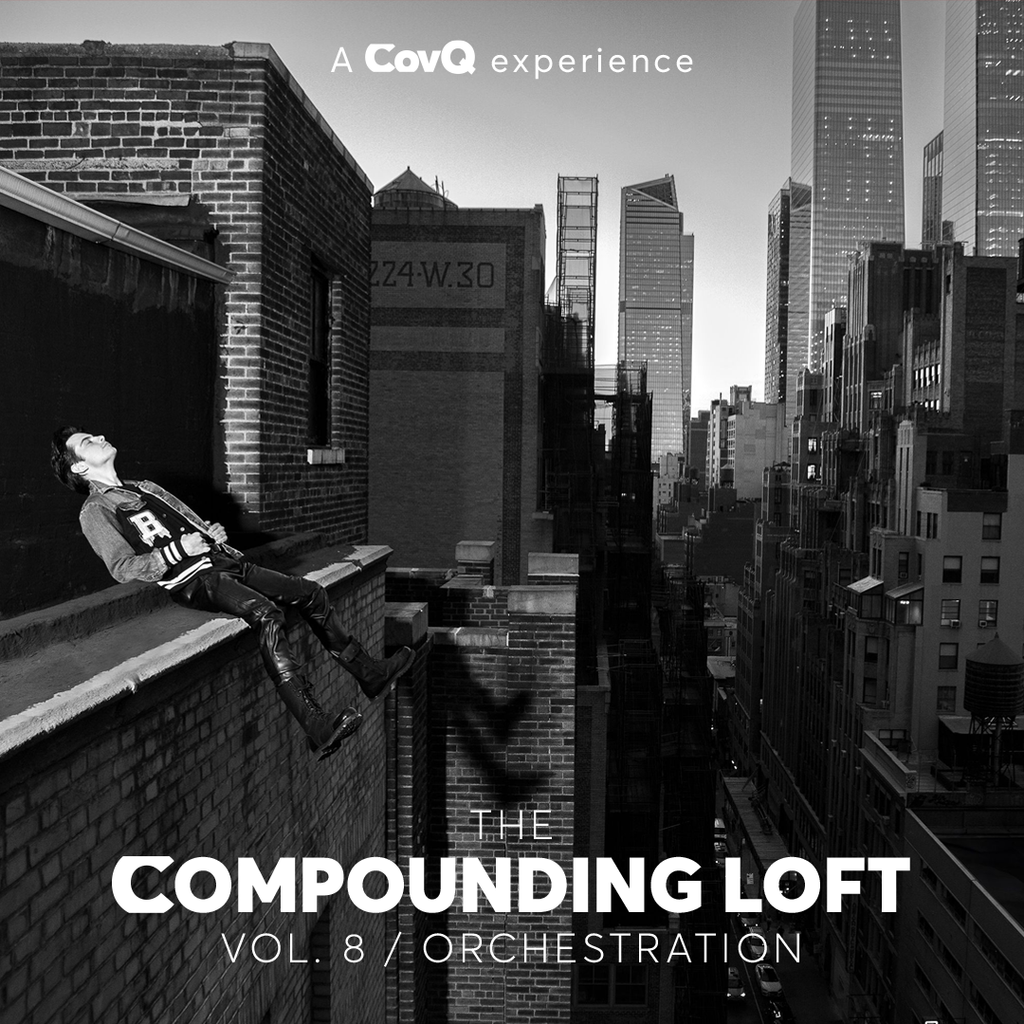
A solitary figure suspended above the Manhattan cityscape creates tension between individual agency and the larger system below. The image suggests that orchestration requires both distance and participation. Artwork: Here and Now by Udo Spreitzenbarth.

Vol. 9 | Vision + Motion
A city reflected in a moving vehicle’s side mirror joins perception, speed and direction in one frame. Vision is neither static nor detached. It emerges, takes form and is refined while moving through the world.
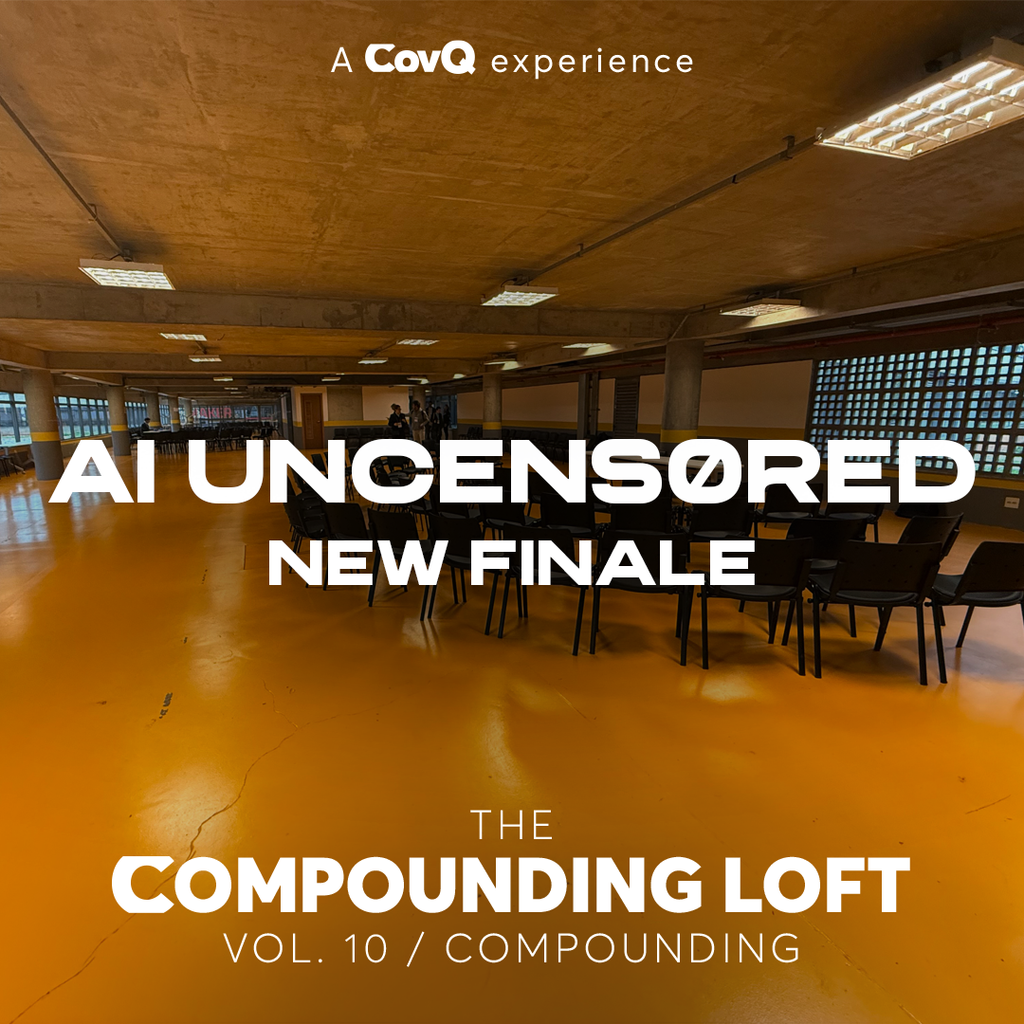
Vol. 10 | Compounding | AI Uncensored
An open concrete room offers a space for communication, gathering and possibility. The saturated amber color and direct intervention “AI Uncensored” take an unmistakable stance. What accumulated across the preceding volumes is distilled to evolve, producing an unplanned new finale.
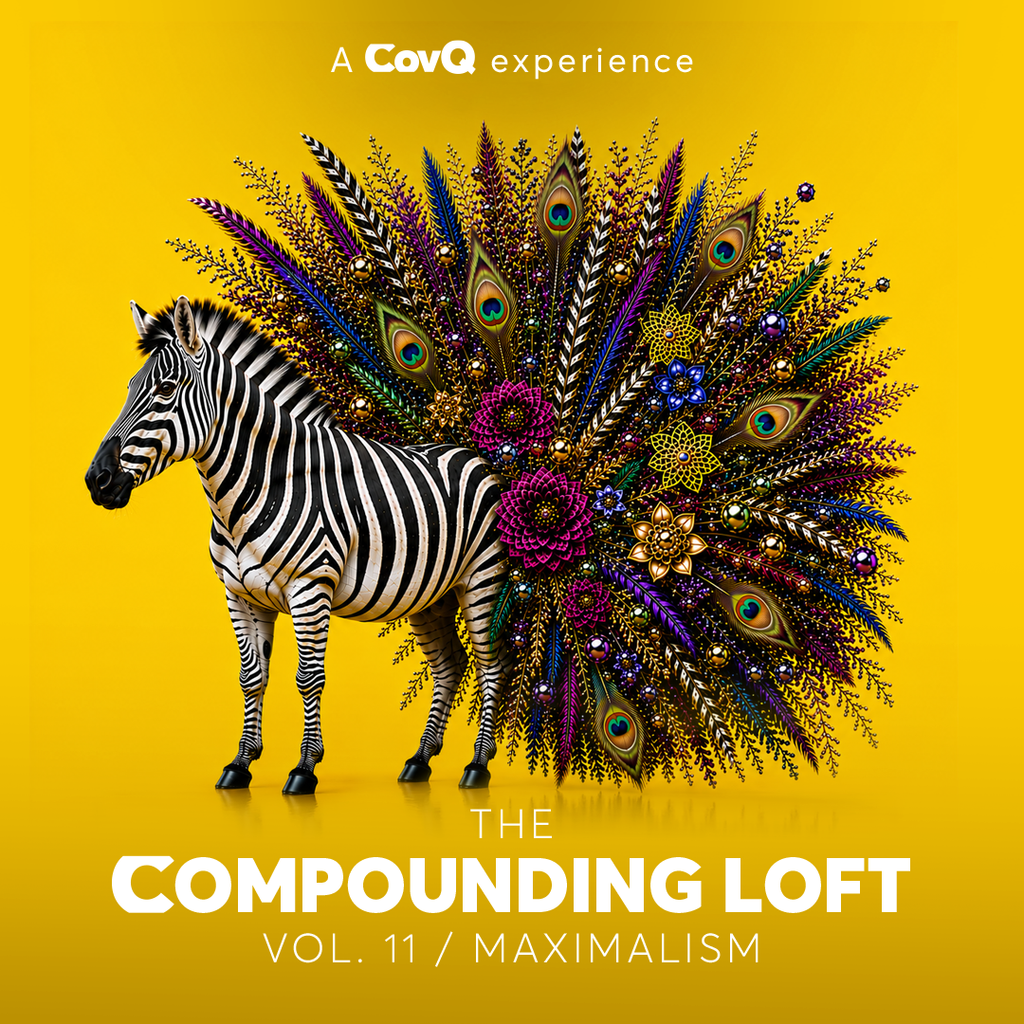
Vol. 11 | Maximalism
A zebra fused with an extravagant peacock-like explosion of feathers, flowers, patterns and color embodies disciplined excess. Natural codes collide and multiply until the anomalous composite becomes its own coherent form. Here, thinking too big is still not big enough.

Vol. 12 | Distress! Withdrawal?
Turned vertically, a section of a modern building appears to project into open blue space. The altered orientation unsettles gravity and perspective, creating a perceived imbalance and a sense of risk and unease. The architecture looks decisive and precarious at the same time, holding the question embedded in the title.
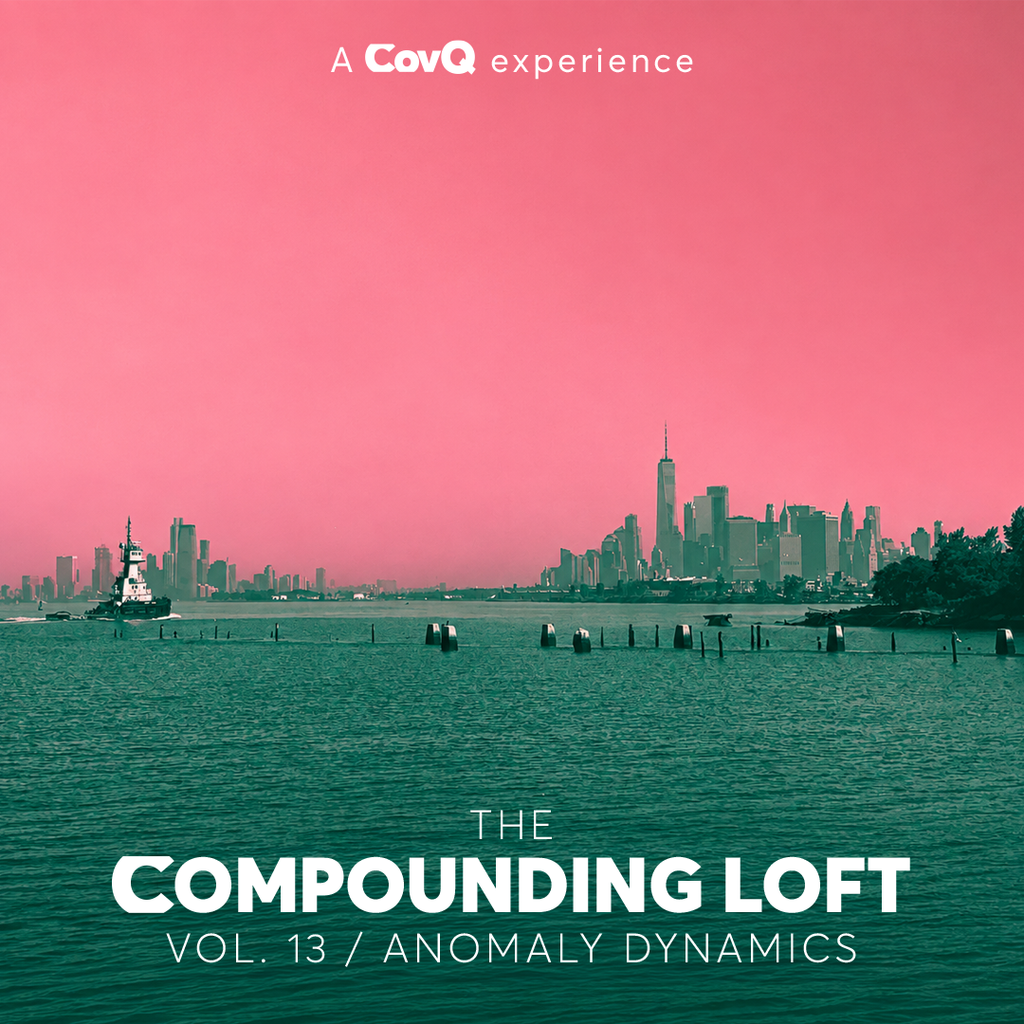
Vol. 13 | Anomaly Dynamics
Manhattan’s Financial District is recoded in bold pink and green, with water and boats placing the familiar financial landscape within a broader world of capital, movement and retreat. The altered view asks what becomes visible when conventional perception is disrupted, and where value might be found when attention moves beyond established patterns. The underlying photograph was taken during the pandemic, when the air was exceptionally clear and uncertainty unusually high.
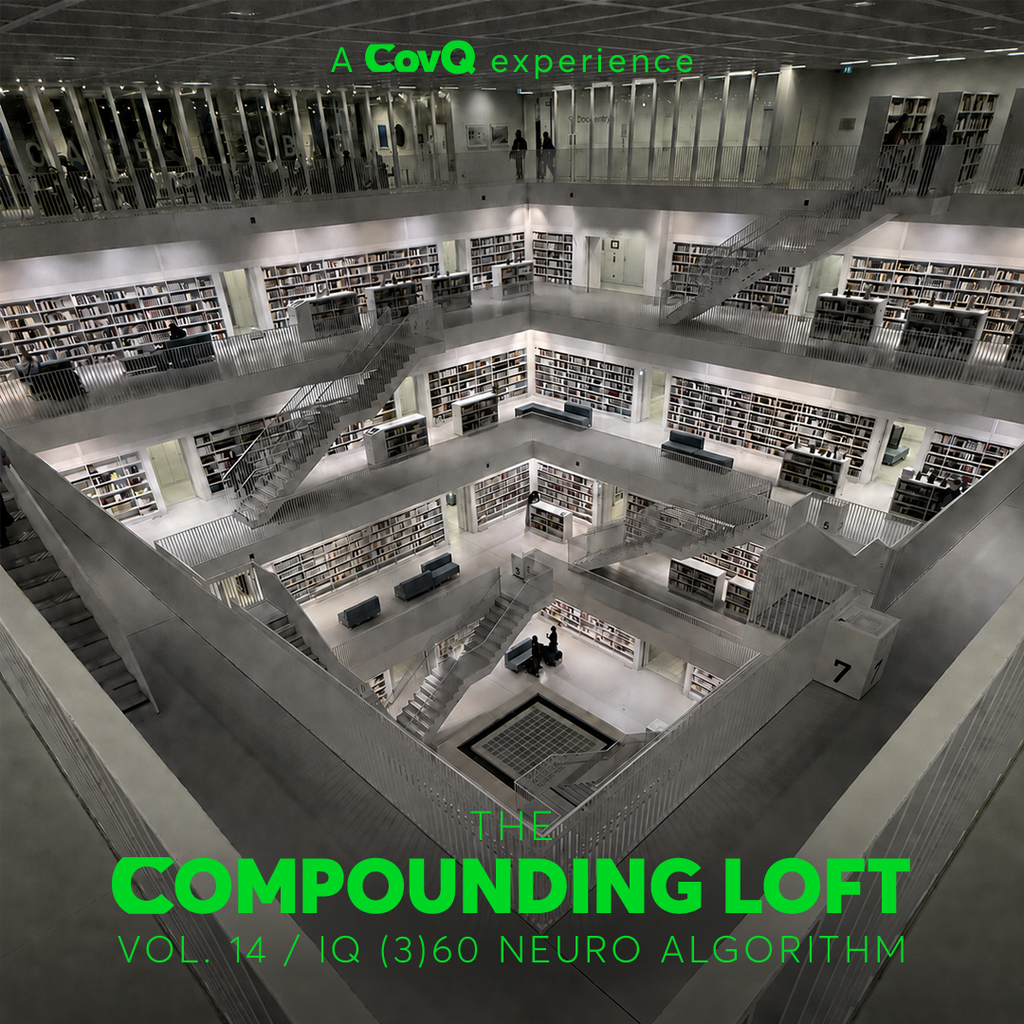
Vol. 14 | IQ (3)60 Neuro Algorithm
The interior of the Stuttgart City Library appears as a precise, multidirectional system of levels, pathways and accumulated knowledge. Its ordered complexity mirrors CovQ’s 60 core value drivers and the neural relationships among them, providing the foundation for a volume in which each song is mapped to a distinct value driver while remaining connected to its broader context and the system as a whole. Location: Stuttgart City Library, designed by Eun Young Yi. Photography: CovQ.

Vol. 15 | CFO
A luminous phoenix-like form rises through a sculptural vertical structure. The image moves the financial mandate beyond control and reporting toward transformation, resilience and the creation of compounded value, a theme later reflected across many of the titles and lyrics.
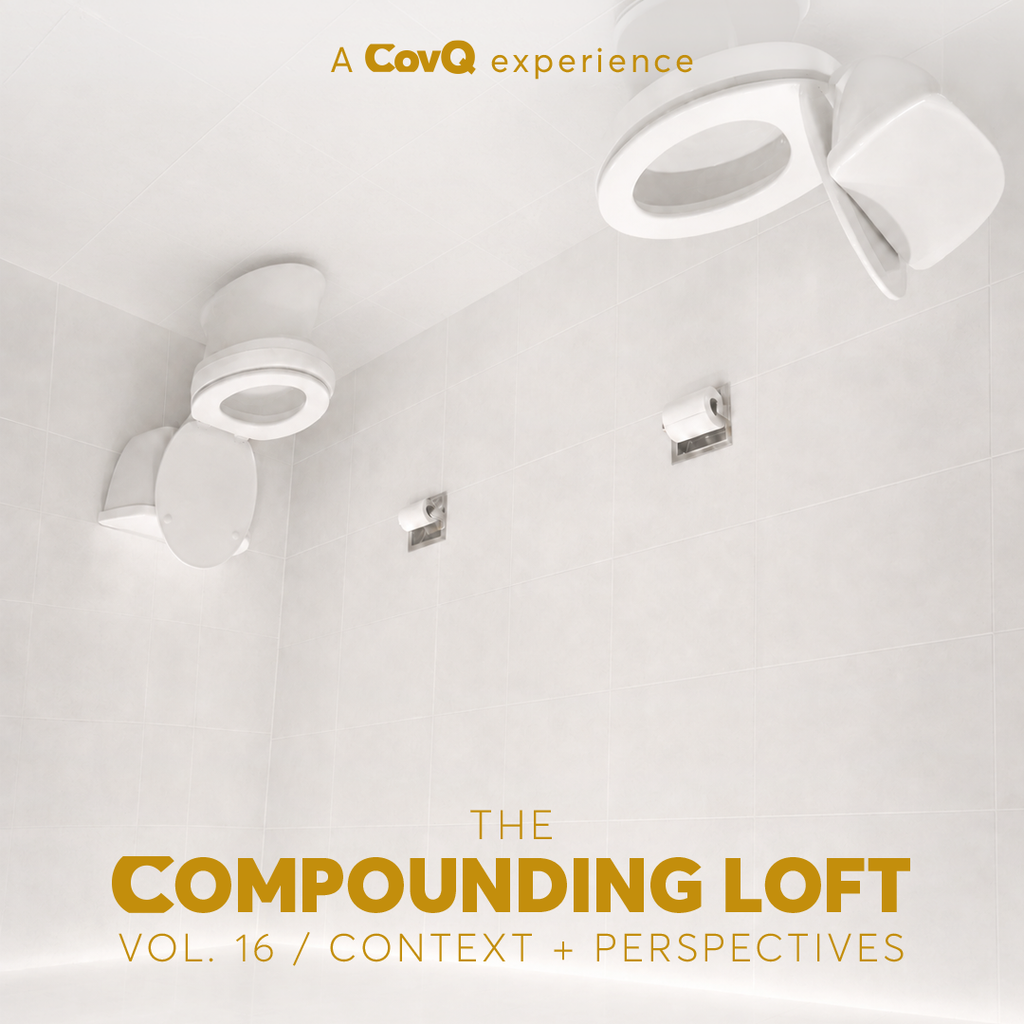
Vol. 16 | Context + Perspectives
A real Fifth Avenue interior is shown upside down. Familiar fixtures and their awkward pairing become an ambiguous spatial composition. Orientation becomes uncertain, demonstrating how context and point of view can alter the meaning of what appears objectively present.
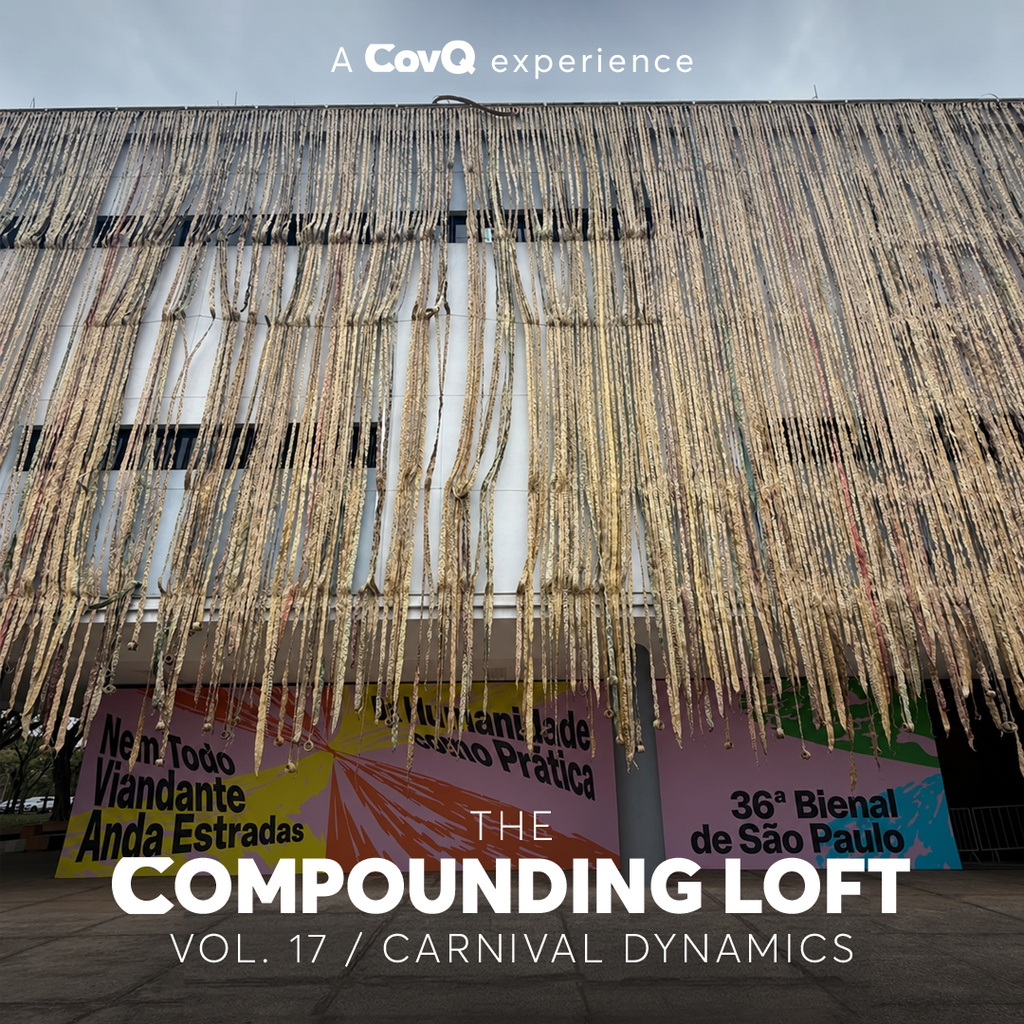
Vol. 17 | Carnival Dynamics
At the 36th Bienal de São Paulo, the phrase “Nem todo viandante anda estradas” means “Not all travelers walk roads.” A curtain of hanging fibers above the words transforms the space into a symbolic entrance and a place of movement, encounter and shared experience. It brings people together across cultures and borders to express themselves, participate and celebrate.

Vol. 18 | Invisible Leverage
A dark blue ring appears inside a luminous green field, resembling an aperture, orbit, signal or force whose source cannot be seen directly. The image gives form to influence that is evident through its effects rather than its visibility. Artwork from 8W8 – Global Space Tribes.

Vol. 19 | Second Person
Two figures, one living and one imagined, appear simultaneously distinct and almost merged, making the “second person” intimate rather than mechanical. The image suggests reflection, companionship, augmentation and an intelligence positioned beside the self.

Vol. 20 | Evolve Compoundedly
Progress comes through consistency, hard and smart work, effective tools and tactics, and systems that carry what has been learned forward. Vol. 20 completes the series, but its title treats completion not as closure, but as accumulated capacity for the future. Everything developed across the twenty volumes has become the foundation for continued evolution.
Together, the 20 covers form The Rhythms of the Algorithms: a visual composition in which repeated structure and radical variation reveal the project’s accumulated intelligence at a glance.
The 20-volume journey
Vol. 1 | Return on Intelligence Deployed
The opening volume establishes the governing proposition: intelligence creates value only when it moves into action. Created for The Compounding Loft at New York Tech Week, it balances discovery with recognizable anchors, sophistication with groove and conceptual ambition with immediate listening pleasure. It is not music about intelligence in the abstract. It is music with forward intent: ideas crossing into decisions, decisions becoming motion and knowledge earning a return through deployment. The volume set the quality threshold and the collaborative method for everything that followed.
Business context: Organizations rarely suffer from a complete absence of information. The greater challenge is converting intelligence into prioritized decisions, coordinated execution and measurable outcomes before its relevance decays.
Listening coordinates: Propulsive | Vocal and electronic | For ignition and decisive forward movement
Vol. 2 | Polo Dynamics
Developed in connection with CovQ’s seasonal associate sponsorship of Greenwich Polo Club, Polo Dynamics was created with the polo audience and its distinctive social environment in mind. It reflects a community that is locally connected and international in background, experience and perspective. The volume draws selectively from polo rather than treating the sport as its sole subject. Speed, anticipation, position, coordination and controlled risk inform its movement, while recurring rhythmic patterns occasionally evoke galloping across the field. Social elegance, cultural range and tactical intelligence broaden the music beyond its sporting origin. The result is an early demonstration of how a physical and social environment can inspire a wider model for organizational behavior.
Business context: Performance in dynamic markets depends on reading the field, anticipating movement and coordinating specialized players with different backgrounds in real time, not simply executing a static plan faster.
Listening coordinates: Fast | Rhythmic and kinetic | For momentum, social energy and coordinated action
Vol. 3 | Nodes
Nodes shifts attention from individual elements to the relationships among them. Genres, periods, geographies and voices behave as points in a network whose value increases through connection. Coherence comes not from sameness but from adjacency, exchange and unexpected pathways. The volume asks the listener to hear how ideas travel and how seemingly distant forms can alter one another when brought into contact. It is the series’ first explicit move from a collection of tracks toward a model of connected intelligence.
Business context: Customers, employees, partners, technologies, integrations, capital and knowledge create greater value when their connections are visible and productive. The quality of the intersections often matters as much as the quality of its individual nodes.
Listening coordinates: Varied | Eclectic and connective | For curiosity, networking and pattern recognition
Vol. 4 | Living Systems
Living Systems treats organizations, cultures and musical sequences as adaptive rather than mechanical. Recurrence, variation, feedback, interdependence and emergence replace the fantasy of perfect control. Sounds develop, disappear and return changed. Individual voices retain their character while participating in a larger ecology. The volume rewards sustained listening because its meaning accumulates through relationships over time. It provides an experiential counterpart to the idea that durable value creation depends on understanding the system, not only optimizing its parts.
Business context: Companies and teams behave as living systems in which interventions and communication create feedback, dependencies and unintended effects. Sustainable improvement requires attention to adaptation and the whole system, not isolated optimization.
Listening coordinates: Organic | Ensemble-led and evolving | For reflection, systems thinking and collaborative environments
Vol. 5 | Ownership
Ownership explores agency, commitment and consequence. It asks what changes when responsibility is not assigned externally but assumed. The music ranges widely because ownership is expressed differently across cultures and circumstances, yet the volume retains an unmistakable center of gravity: presence, conviction and the willingness to carry an outcome. It extends the project’s sonic range while making the human standard more explicit. Value creation begins to sound personal, not because it is individualistic, but because final accountability cannot be outsourced.
Business context: Strategies advance when people understand the outcome, have the authority to act and accept responsibility for completion. Ownership closes the space in which important work otherwise becomes everybody’s concern and nobody’s obligation.
Listening coordinates: Grounded | Vocal, global and assured | For commitment, leadership and taking responsibility
Vol. 6 | Noise Reduction
Noise Reduction is built around informed judgment. It uses information, space, contrast and restraint to explore the difference between having more information and achieving greater clarity. Density appears, but it is framed; quiet appears, but it is active rather than empty. The listener is invited to notice structure, remove distraction and recognize what deserves attention. In a series defined by abundance and discovery, this volume asserts that subtraction is also an intelligent act. The ability to exclude can be as valuable as the ability to find.
Business context: Competitive advantage increasingly depends on identifying what is consequential within expanding volumes of data, activity and commentary, then translating that clarity into better decisions. Strategic clarity is created through disciplined exclusion as well as analysis.
Listening coordinates: Focused | Electronic and spacious | For concentration, clarity and strategic reset
Vol. 7 | Beyond AI
Beyond AI examines what becomes more valuable as machine capability expands: imagination, humor, emotion, friction, eccentricity and human surprise. Its futurism is warm rather than sterile. Technology is present as material and context, but the volume resists the idea that technical perfection is the endpoint of creativity. The selections foreground expressive choices that are difficult to reduce to optimization. The point is neither anti-AI nor nostalgic. It is that intelligence becomes more consequential when human distinctiveness remains active inside the system.
Business context: As technical capabilities become broadly accessible, advantage moves toward judgment, imagination, trust and the ability to frame better questions. AI increases the premium on distinctly human contribution rather than eliminating it.
Listening coordinates: Bright | Experimental, vocal and electronic | For invention, optimism and human possibility
Vol. 8 | Orchestration
Orchestration expands the scale. Ensembles, orchestras and collaborations demonstrate how distinct capabilities can retain their character while producing an outcome no part could achieve alone. The volume tests whether the project’s musical DNA can survive a major stylistic reset and proves that it can. Coordination is not presented as uniformity. It is the disciplined arrangement of difference: knowing when to lead, support, enter, recede and make space for another voice.
Business context: Enterprise value is rarely created by one function acting alone. Orchestration aligns differentiated capabilities, resources and timing so that strategy can move across organizational boundaries without erasing expertise.
Listening coordinates: Expansive | Orchestral and ensemble-driven | For coordination, scale and collective ambition
Vol. 9 | Vision + Motion
Built from film music, Vision + Motion joins perception to momentum. A vision without movement remains an image; movement without vision becomes activity without direction. Cinematic forms make this relationship audible through anticipation, propulsion, suspense and release. The volume moves the first phase of the project toward its threshold: after nine volumes, the accumulated body of work is substantial enough to inform the creation of what follows.
Business context: Vision creates value only when it guides choices, resources and execution. Motion supplies speed and learning, while vision keeps activity aligned with an intended destination.
Listening coordinates: Cinematic | Instrumental and forward-moving | For strategy, momentum and purposeful transition
Vol. 10 | Compounding | AI Uncensored
Volume 10 changes the operating model. The 450 selected tracks from Volumes 1 through 9 became a corpus from which AI inferred a latent musical DNA. It then produced an initial volume of 50 tracks by 50 artists not previously represented, without genre quotas, geographic mandates or a predetermined new theme. The set was retained uncensored and unchanged, with human judgment validating and sequencing the result. Compounding is therefore both subject and method: prior decisions become productive inputs, changing the economics of the next high-quality output. Distilled to evolve.
Business context: When decisions, reasoning and context remain reusable, each operating cycle can begin from a stronger position and laser focused. Compounding improves the marginal economics of insight, execution and innovation instead of repeatedly paying to relearn the same lessons.
Listening coordinates: Unpredictable | Cross-genre and AI-inferred | For discovery, creative risk and testing accumulated intelligence
Vol. 11 | Maximalism
Maximalism asks how far intensity, scale, virtuosity, beauty and excess can be pushed without losing coherence. Brass, advanced ensembles, monumental forms, avant-garde energy and audacious popular anchors coexist in a volume designed to feel abundant rather than merely loud. Its extremes are purposeful. After Compounding demonstrated the efficiency of accumulated intelligence, Maximalism tests whether that intelligence can support extravagance, risk and an expanded canvas. More becomes meaningful when every element still earns its place.
Business context: Scale can magnify ambition and impact, but it also magnifies waste and incoherence. Maximalism asks how organizations can expand thinking, resources, reach and complexity without lowering standards or losing the governing idea.
Listening coordinates: Extreme | Dense, virtuosic and large-scale | For elevation, spectacle and boundary expansion
Vol. 12 | Distress! Withdrawal?
This volume inhabits the tension between pressure and opportunity. Its punctuation matters: distress is declared, withdrawal is questioned. The sequence passes through instability, fracture, endurance and reconsideration without collapsing into darkness. In a value-creation context, distress can expose weakness, but it can also reveal mispricing, resilience and the need for decisive intervention. The music preserves ambiguity rather than resolving it prematurely. The listener must remain present while familiar structures become unstable.
Business context: Under pressure, leaders must distinguish temporary dislocation from structural deterioration. The quality and timing of that judgment determine whether capital is protected, withdrawn, redirected or deployed into opportunity.
Listening coordinates: Tense | Dramatic, vocal and cinematic | For pressure, reassessment and difficult decisions
Vol. 13 | Anomaly Dynamics
Anomaly Dynamics is built around deviations that reveal what conventional patterns conceal. Developed alongside CovQ’s participation in the Greenwich Economic Forum and with alternative investments in mind, the volume brings finance, experimentation and global cultural intelligence into productive collision. The unusual is not treated as novelty for its own sake. An anomaly can be a warning, an opportunity, an exception that changes the model or a perspective that exposes the limitations of the norm. Contrast becomes an analytical instrument. Beauty can be as anomalous as abrasion when its placement changes what the listener notices.
Business context: Outliers may identify emerging risk, non-consensus opportunity or a model that no longer explains reality. Organizations that investigate anomalies rather than smoothing them away improve foresight and strategic optionality.
Listening coordinates: Adventurous | Avant-garde, hybrid and rhythmically complex | For non-consensus thinking and detecting opportunity
Vol. 14 | IQ (3)60 Neuro Algorithm
The series’ most explicit systems work maps CovQ’s 60 core value drivers to 60 tracks in a fixed order. Each selection relates directly to one driver, while the complete sequence must still function as a continuous five-hour experience. Titles and lyrics carry unusual weight, but precision never displaces musical quality. The result makes an abstract architecture experiential. Market position, innovation, leadership, culture, execution and other drivers become memorable through sound. It is taxonomy transformed into flow and a neural model translated into a human listening journey.
Business context: Enterprise value emerges from interacting drivers rather than from a single metric. Making those augmented value drivers explicit enables diagnosis, prioritization and coordinated value generation while preserving their interdependencies as a system.
Listening coordinates: Structured | Lyrical, diverse and concept-mapped | For learning, diagnosis and navigating value creation
Vol. 15 | CFO
CFO listens to financial leadership as a changing mandate rather than a job title. Informed by themes explored in the joint Horváth | CovQ White Paper on the CFO’s new mandate, the volume reflects the movement from control toward compounding value. Discipline, control and stewardship remain, but they coexist with transformation, technology, judgment, communication and long-term value creation. The music balances established voices with contemporary complexity and global perspectives. It avoids reducing finance to numbers or treating the CFO role and finance function as cultural stereotypes. Instead, the volume presents financial intelligence as connective tissue between resources, choices, risk, execution and enterprise value. It focuses solely on bands from countries from the top eight economies in 2050 as forecasted by Goldman Sachs Research.
Business context: The CFO mandate is expanding from reporting and control toward strategic selectivity, resource allocation, transformation and proactive, measurable value creation. Financial leadership connects ambition and opportunity to economic consequence.
Listening coordinates: Assured | Sophisticated, vocal and globally balanced | For judgment, stewardship and capital perspective
Vol. 16 | Context + Perspectives
Context + Perspectives demonstrates that the same reality changes meaning when the observer, position, culture or frame changes. Dialogues, duets, multiple languages, field textures, advanced ensembles and contrasting viewpoints create a volume in which no single perspective is sufficient. Investor and operator, local and global, human and machine, signal and narrative all encounter one another. The work does not flatten difference into consensus. It makes perspective itself part of the intelligence required for better decisions.
Business context: Decisions improve when leaders understand how incentives, roles, cultures and time horizons shape interpretation. Context gives facts meaning. It determines which facts are most relevant and how they should inform action.
Listening coordinates: Expansive | Multilingual, dialogic and genre-fluid | For reframing, empathy and seeing from multiple positions
Vol. 17 | Carnival Dynamics
Carnival Dynamics studies celebration as organized collective motion. Procession, masquerade, rhythm, costume, streets and participation transform a crowd into a temporary living system. The volume is warm, positive and communal, but its joy is structurally sophisticated. Carnival coordinates individuals without eliminating spontaneity and creates shared energy without requiring uniformity. Following the analytical density of the preceding volumes, it restores release and pleasure while extending the series’ inquiry into how people move together.
Business context: Shared energy, recognition, celebration and participation strengthen the social capacity required for execution. Culture creates value when it converts individual contribution into belonging, momentum and coordinated collective action.
Listening coordinates: Exuberant | Percussive, vocal and communal | For celebration, gathering and collective energy
Vol. 18 | Invisible Leverage
Invisible Leverage turns toward the quiet forces that create disproportionate outcomes: trust, timing, knowledge, reputation, optionality, networks, restraint and accumulated advantage. Its sound is cooler and sharper after Carnival Dynamics, drawing on sophisticated songwriting, chamber electronics, art rock, restrained funk and advanced ensemble work. This volume looks beyond visible expressions of power toward forces that operate quietly but shape consequential outcomes. It is interested in what operates before becoming visible in results, and in the strategic value of forces that cannot be captured fully on a conventional dashboard.
Business context: Many of the strongest competitive advantages are built before they appear in financial results. Trust, knowledge, reputation, relationships and optionality reduce friction, expand the range of available choices and improve their quality, timing and outcomes.
Listening coordinates: Controlled | Cool, intricate and understated | For focus, strategic depth and quiet advantage
Vol. 19 | Second Person
Second Person explores augmentation, digital identity and the increasingly active relationship between a human being and a technological counterpart. The title suggests another presence: a twin, assistant, model or intelligence that reflects and extends the first person without becoming identical to it. Advanced trip-hop, electronic structures, avant-jazz, voice and long-form development create a future-facing volume that aims to inspire rather than unsettle. Technology appears as an empowering second perspective with which agency must be negotiated.
Business context: Intelligent systems are becoming participants in analysis, creation and execution rather than passive tools. Advantage depends on designing this second presence to extend human agency while preserving accountability and purpose.
Listening coordinates: Futuristic | Electronic, voice-led and immersive | For augmentation, digital imagination and working with intelligent systems
Vol. 20 | Evolve Compoundedly
The final volume does not close the system; it shows how the system continues. Evolution here is not a sudden replacement of what came before. It is change informed by accumulated intelligence, selective memory, experimentation and repeated action. Long-form pieces, advanced ensembles, songwriting, groove and global musical intelligence build toward a finale that belongs to the entire journey. Evolve Compoundedly completes 100 hours while refusing the logic of completion. Evolve Compoundedly completes 100 hours while refusing the logic of completion. Compounding creates the foundation for continued evolution.
Business context: Durable organizations do not choose between continuity and reinvention. They preserve useful intelligence, discard obsolete assumptions and use every cycle of execution to increase their capacity for the next transformation.
Listening coordinates: Ascending | Long-form, hybrid and generative | For renewal, synthesis and the next beginning
Listening coordinates
The 20 volumes were designed as complete sequences, but they do not require a single point of entry. A listener can begin with a need, a situation or a sonic preference. The following coordinates are descriptive rather than prescriptive. They help locate an entrance without reducing a volume to genre or mood.
| Vol. | Title | Energy | Sound | Moment |
| 1 | Return on Intelligence Deployed | Propulsive | Vocal and electronic | Ignition and decisive movement |
| 2 | Polo Dynamics | Fast | Rhythmic and kinetic | Momentum and coordinated action |
| 3 | Nodes | Varied | Eclectic and connective | Curiosity and pattern recognition |
| 4 | Living Systems | Organic | Ensemble-led and evolving | Reflection and systems thinking |
| 5 | Ownership | Grounded | Vocal, global and assured | Commitment and leadership |
| 6 | Noise Reduction | Focused | Electronic and spacious | Concentration and strategic reset |
| 7 | Beyond AI | Bright | Experimental and human | Invention and optimism |
| 8 | Orchestration | Expansive | Orchestral and collaborative | Coordination and scale |
| 9 | Vision + Motion | Cinematic | Instrumental and forward-moving | Strategy and transition |
| 10 | Compounding | Uncensored | Unpredictable | Cross-genre and AI-inferred | Discovery and creative risk |
| 11 | Maximalism | Extreme | Dense and virtuosic | Elevation and boundary expansion |
| 12 | Distress! Withdrawal? | Tense | Dramatic and cinematic | Pressure and reassessment |
| 13 | Anomaly Dynamics | Adventurous | Avant-garde and hybrid | Non-consensus thinking |
| 14 | IQ (3)60 Neuro Algorithm | Structured | Lyrical and concept-mapped | Learning and diagnosis |
| 15 | CFO | Assured | Sophisticated and globally balanced | Judgment and stewardship |
| 16 | Context + Perspectives | Expansive | Multilingual and dialogic | Reframing and empathy |
| 17 | Carnival Dynamics | Exuberant | Percussive and communal | Celebration and gathering |
| 18 | Invisible Leverage | Controlled | Cool and intricate | Strategic depth and quiet advantage |
| 19 | Second Person | Futuristic | Electronic and immersive | Augmentation and digital imagination |
| 20 | Evolve Compoundedly | Ascending | Long-form and generative | Renewal and the next beginning |
Six movements of an evolving intelligence system
Collaboration
Volumes 1 through 3 established the working relationship. Human intent defined the problem; AI widened discovery; repeated selection and rejection began to create a shared context. Intelligence moved into action, action became coordinated motion, and motion revealed a network of relationships.
Accumulation
Volumes 4 through 9 deepened the system. Living Systems, Ownership, Noise Reduction, Beyond AI, Orchestration and Vision + Motion added increasingly different forms while preserving a recognizable standard. Each volume contributed content and also trained the collaboration through thousands of decisions.
Compounding
Volume 10 made the accumulated judgment operational. The corpus became an input, the latent musical DNA became usable, and a new high-quality starting point could be generated at radically lower marginal effort.
Expansion
Volumes 11 through 13 stress-tested the intelligence. Maximalism expanded scale; Distress! Withdrawal? introduced instability; Anomaly Dynamics challenged conventional pattern recognition. Coherence survived extremes without becoming formulaic.
Systemization
Volumes 14 through 16 connected the musical system more explicitly to value creation architecture. Sixty drivers became a continuous sequence; financial leadership became a multidimensional perspective; context itself became an operating variable.
Evolution
Volumes 17 through 20 moved from collective energy through invisible advantage and technological augmentation toward open-ended evolution. The completed series demonstrates that compounding is not repetition. Properly designed, it expands the capacity for difference and momentum at scale.
Beyond recommendation
Spotify, Apple Music and other platforms are essential distribution environments for the project, but their recommendation logic is not its design model. A platform typically asks what an individual is likely to play next based on musical DNA and patterns of user behavior.
The Compounding Loft asks a different set of questions, some examples:
What principle should become perceptible through the listening experience?
What degree of familiarity will give the listener an accessible point of entry?
Where should surprise interrupt expectation?
How should energy develop over several hours?
Which cultural or musical perspective changes the frame?
Does the music meet the required quality standard independently of its conceptual relevance?
How do the title and lyrics add meaning to the track’s placement?
Does the sequence of titles create a coherent secondary narrative?
What role does the track play on its own and within the sequence?
What does this track mean here that it would not mean elsewhere?
What must be rejected even when its title, lyrics or theme appear to fit?
Is this the strongest available choice in the full context of the volume at this point in the discovery process?
The distinction is among prediction, intention and leadership. Prediction infers preference from behavior. Intention defines the idea and desired direction. Leadership designs the journey that brings them to life. The three can complement one another, but they are not interchangeable.
Implications for AI and enterprise value creation
This project began with music, but the way it was built has broader relevance for how logic, AI and human judgment create value together.
Organizations generate a continuous stream of judgments about customers, capital, talent, risk, product, partnerships and strategy. Systems usually record the final decision or outcome, while the comparisons, rejected alternatives, contextual signals and qualitative reasoning remain scattered or disappear. That loss forces teams to restart work that should have become institutional intelligence.
The Compounding Loft experiment suggests five design principles for a different model:
1. Capture context, not only outcomes. A decision becomes reusable when the system retains what it was responding to.
2. Preserve rejection logic. Knowing why a plausible option failed prevents repetition and sharpens future searches.
3. Connect decisions across time. Intelligence compounds when earlier work remains available to the next cycle.
4. Use AI to widen and activate memory. Search, comparison and contextual recall create leverage when governed by clear standards.
5. Keep human judgment at the point of consequence. Purpose, quality, interpretation and final accountability remain human responsibilities.
This is closely aligned with the purpose of CovQ as a value creation management platform. Strategy and execution create more value when intelligence is retained, coordinated and connected to subsequent action. The soundtrack project makes that principle audible and visible without turning the work into a product demonstration. It provides cultural evidence of the same underlying logic: deeper context improves decisions; coordinated decisions improve execution; accumulated execution creates momentum; and momentum can compound into greater enterprise value.
A consumer experience with institutional memory
The series occupies an unusual position. It is enjoyable without requiring the listener to understand its architecture. It can accompany an event, a journey, individual work or a shared environment. Yet beneath that accessibility is a dense system of decisions and principles.
That duality matters. Many experiments in AI foreground the technology and ask the audience to admire the mechanism. The Compounding Loft Soundtracks foreground the experience. AI is consequential because it enables range, continuity, memory and speed, not because it must announce itself in every track. The human touch is equally present without becoming a claim of artisanal purity. The work is strongest where the capabilities interlock.
The visual system reinforces this architecture. Twenty covers establish distinct identities while repeating a recognizable typographic frame. Photography, architecture, artwork, found images and AI-mediated treatments create another sequence across locations, contexts and degrees of abstraction. As with the music, coherence comes from disciplined relationships rather than sameness.
PERSPECTIVE
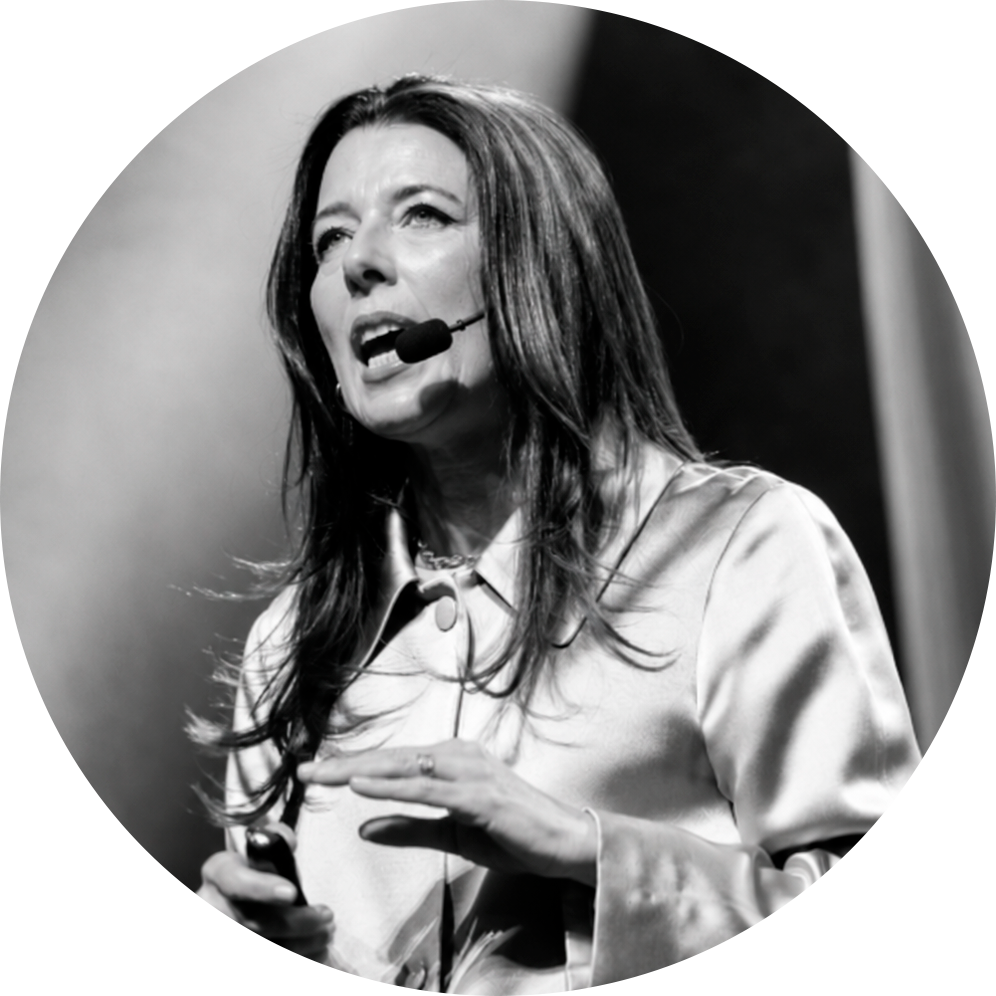
Dr. Helena Boschi
Neuroscientist and behavioral psychologist
Founder and CEO of Chequered Leopard, London, UK
Dr. Helena Boschi is the author of Why We Do What We Do: Understanding Our Brain to Get the Best Out of Ourselves and Others
The brain is constantly adapting and evolving in response to the world around us. If we want to influence the direction of our own neuroplasticity, we need to think carefully about the experiences we give ourselves. One way is through richer sensory experiences. Most business interactions engage only a fraction of our sensory systems. Music adds another dimension to this. Sound, rhythm, lyrics and emotion capture attention, create associations, encourage reflection and shape what we remember. And when music is experienced together, those memories become shared. We can recall, revisit and reinforce them collectively.
Experience compounds because everything new that happens to us builds on what came before. The more we notice, connect and remember, the more we have to draw on when making the next decision. The brain is never simply storing information; it is being changed by it.
From listening to organizational practice
The Compounding Loft Soundtracks can serve as an accessible cultural entry point into value creation. An organization can select a volume that corresponds to a current need, challenge or ambition: Ownership when accountability is diffuse, Noise Reduction when priorities are obscured, Orchestration when capabilities must work together, Distress! Withdrawal? when pressure tests conviction, Context + Perspectives when teams see the same situation differently, or Invisible Leverage when important sources of advantage remain unrecognized.
Listening changes the point of entry. Instead of beginning with another management presentation, teams encounter a principle through rhythm, voice, language, tension, contrast and time. Music makes space for interpretation without requiring specialized business vocabulary. A familiar track may create immediate recognition; an unfamiliar one may interrupt habitual thinking. The sequence gives participants a shared experience before they are asked to form a shared view.
The practice can remain simple:
1. Listen. Choose a complete volume or a shorter sequence aligned with the team’s situation and allow the music to establish the theme before explaining it.
2. Notice. Ask what participants heard in the titles, lyrics, shifts in energy, juxtapositions and progression. Different interpretations are useful information rather than errors to correct.
3. Discuss. Connect those observations to the organization. Where is the principle already present? Where is it absent, misunderstood or blocked? How do different functions or levels experience it?
4. Translate. Identify the behaviors, decisions, initiatives or operating changes that would make the theme visible in practice.
5. Act and revisit. Return to the volume as work progresses, using it as a cultural reference while actions, outcomes and learning are reviewed.
This approach can support leadership off-sites, strategy sessions, transformation programs, team gatherings and ongoing cultural development. Different teams can work with different volumes according to their priorities. One theme can become a monthly organizational focus. Leaders can open a workshop with a selected sequence, compare how functions interpret the same music, or invite employees to choose the volume that best reflects the organization’s present condition and the one it most needs next.
The enjoyment is not incidental. Serious business principles are more likely to travel when people want to engage with them. Music can make a difficult idea inviting, give abstract language emotional weight and create memories that outlast a presentation. It allows value creation to enter informal conversations and shared environments rather than remaining confined to formal planning processes.
The soundtracks create a cultural and experiential foundation through which value-creation principles can be recognized and understood, but also felt, lived, discussed, remembered and activated. By making abstract business themes engaging, social and enjoyable, they can turn them into a shared language for teams and organizations.
Conclusion
The Compounding Loft Soundtracks began as music for a place and became a completed cultural and intelligence system.
Across 20 volumes, 1,000 tracks and approximately 100 hours, human judgment and AI did more than assemble a collection. Together they developed context, retained memory, tested principles, absorbed corrections and crossed musical, cultural and conceptual boundaries. Each volume acquired its own identity while remaining part of one journey. Each decision strengthened the context available to the next.
The central achievement is therefore not scale alone as one thousand tracks can still be a list. Here, tracks form sequences; sequences investigate themes; themes connect across volumes; covers make those themes visible; and accumulated decisions become a corpus capable of informing subsequent work. The meaning resides in these relationships and in the flow they create over time.
The 20 themes give the work its intellectual spine. The journey begins with intelligence becoming action and proceeds through motion, networks, systems, ownership, discernment, human distinctiveness, orchestration and execution. Compounding marks the point at which prior judgment becomes productive. The second half demonstrates that this intelligence can remain coherent as the project expands and changes. It moves through scale, distress, anomaly, explicit value drivers, financial stewardship, competing perspectives, collective energy, invisible leverage and augmentation before culminating in evolution.
That final theme completes the architecture without closing the inquiry. To evolve compoundedly is to change with memory: to preserve what remains valuable, release what no longer serves, and allow every cycle of thought and action to improve the conditions for the next. The final volume does not return the listener to the beginning. It returns with greater range, deeper context and a larger field of possibility.
The project also demonstrates a specific role for artificial intelligence in creative and organizational work. AI is most consequential here not as a substitute author or an engine of frictionless output, but as a means of expanding discovery, retaining context and activating accumulated human judgment. Human beings remain responsible for purpose, quality, interpretation, sequence and consequence. The strength lies in the relationship.
For organizations, the completed work offers more than metaphor. Its themes can be recognized, discussed, felt, lived, remembered and activated. Music gives abstract principles emotional and social presence. It can create a shared language before teams attempt to create a shared plan, bringing pleasure, curiosity and humanity into the serious work of building value.
The Compounding Loft Soundtracks are complete because the full movement has been made: from Return on Intelligence Deployed to Evolve Compoundedly. What began as a soundtrack became a consumer listening experience, a logic and human-AI case, a visual narrative, a cultural framework and an original form in its own right.
20 volumes. 100 hours. 1000 tracks. 10000 words. One foundation. One completed work. One evolving system.
What is expressed here through music and its related creative work applies equally to any field where data, people, and direction come together.
AFTERWORD
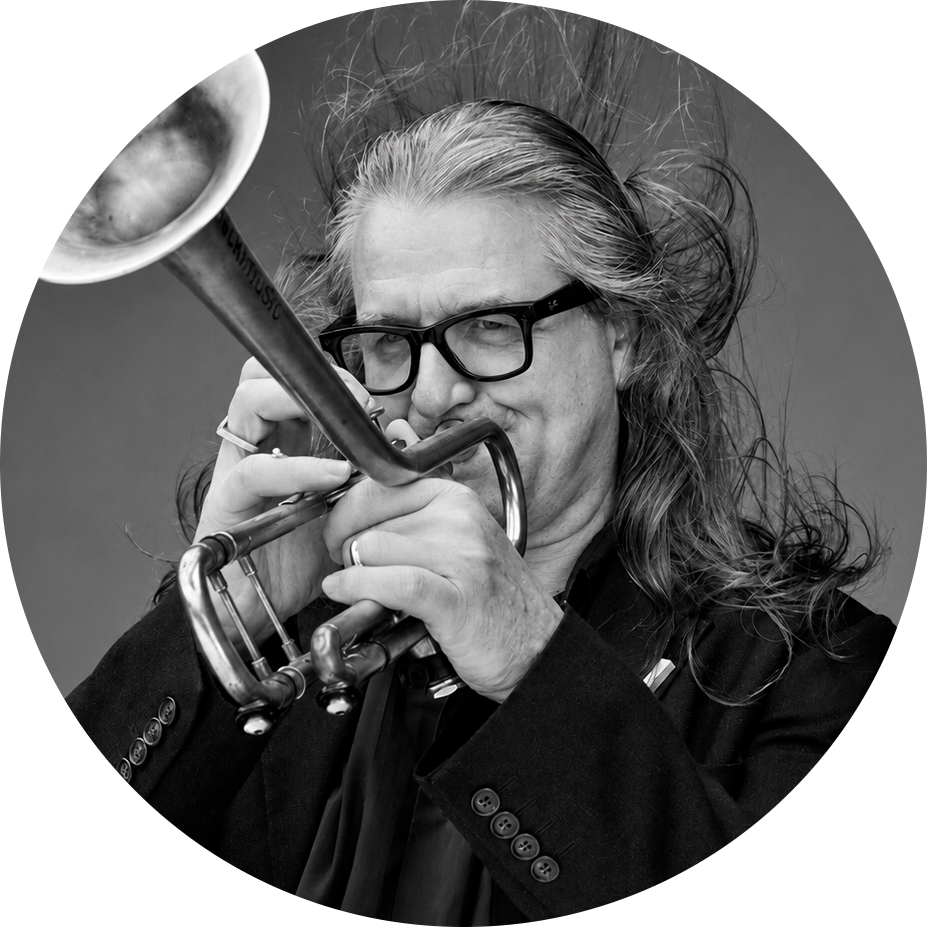
Franz Hackl
Independent Music Professional
Franz Hackl grew up in Schwaz, Tyrol, where trumpets were played and built. In 1990, he carried that craft to New York and made Harlem home. He tours internationally as a featured soloist and with the IDO Quartet, B3+, and Outreach Orchestra, performs with Craig Harris, and works with Gene Pritsker’s Sound Liberation and Composers Concordance. In 2025, he played on Residente’s Grammy-winning album Las Letras Ya No Importan.
Photo: Peter Lueders
Hackl composes concertos, jazz compositions, and orchestral works, but his subject is connection. He founded the Outreach Music Festival & Academy in 1993 because music should do more than fill a room; it should enlarge it. An educator, he developed a trumpet methodology and helped pioneer online brass education. He also designs custom horns in the family business.
Whether composing, teaching, building or performing, Hackl keeps returning to the same question: how can we create a shared experience that makes us better together?
AFTERWORD
The Essence of Complexity: Simplicity in a Wonderfully Complex World
Onstage, one unexpected note can change how we hear the whole piece. We can ignore it, or hear a door opening. Improvisation lets us respond to that surprise; sometimes a note nobody planned deepens the music and takes it somewhere new. Life offers the same chance if we have learned to listen.
To me, simplicity means understanding how things connect well enough to move when one changes. Complexity offers possibilities; understanding lets us use them without kneeling before the system.
A recommendation algorithm does the opposite. It notices what I like and hands it back with exquisite manners. Millions of songs within reach; my taste and vision shrink to fit the room.
AI can search, remember near misses, compare ideas and reveal relationships. It can free us to listen, imagine and judge. Let the machine count. But who chose the goal? Who profits? Whose voice got filed under noise? We can arrive at the wrong place faster than ever, carrying a beautiful looking chart.
Numbers show patterns; they cannot tell us what those patterns mean. Twelve notes can become a lullaby, a protest song, a symphony or the worst commercial song ever written. Markets price hopes and fears about tomorrow, though everyone owns the same calculator. Never let an algorithm, or anyone else, define success for you.
Ralf Hirt once texted me: “People compound, too.” He was right. Musicians hear it happen. An ensemble rehearses, listens, leads, follows and takes risks. Gradually it becomes an organism that hears more than any one player. In jazz, improvisation is composing while listening. Another musician’s note changes what you create. You lead and follow in the same breath.
Great musicianship and natural authority come from the same place: mastery, creativity, attention and the ability to raise everyone else’s level. A title can reserve a chair; it cannot make anyone play better. Perfection does not exist. If I never miss, perhaps I am not reaching far enough. A wrong note should change how we listen, not generate an incident report.
CovQ’s Tech + AI + Data + People works for me as an ensemble held together by principles. Data gains context; decisions retain their reasons; each round teaches the next. Quantity and quality share the room. The Compounding Loft Soundtracks test this across 1,000 tracks. A thousand is arithmetic. Meaning lives in the relationships, contradictions and surprises.
At Outreach, the festival I direct, last year’s “From Deception to Connection” led to this year’s “YOU BELONG. Breathe in. You’re in.” We teach listening because belonging takes more than agreement. Cynicism has the better marketing department; decency has the deeper breath. Make room for a voice that could change our tune.
Connect the dots we can see; leave room for the unforeseen. When the unexpected note arrives, welcome it. Listen, answer, enjoy it, learn from it. Together we will create what none of us could have planned alone. The future tests whether we can hold to our purpose. Let AI process the world. Let us decide what it is for and remain curious enough to be changed by it.
The complete collection
1. Return on Intelligence Deployed
2. Polo Dynamics
3. Nodes
4. Living Systems
5. Ownership
6. Noise Reduction
7. Beyond AI
8. Orchestration
9. Vision + Motion
10. Compounding | AI Uncensored
11. Maximalism
12. Distress! Withdrawal?
13. Anomaly Dynamics
14. IQ (3)60 Neuro Algorithm
15. CFO
16. Context + Perspectives
17. Carnival Dynamics
18. Invisible Leverage
19. Second Person
20. Evolve Compoundedly
Listen
The Compounding Loft Soundtracks Vol. 1 – 20
Perspectives on Value Creation from The Compounding Loft Sessions
Value Management Demands Measurable Returns
We are moving beyond managing projects to managing programs and, ultimately, business value. At global scale, success depends on clear priorities, aligned execution, and transparent reporting. The goal is no longer to report status alone, but to measure the value and ROI delivered. AI-enabled, connected infrastructure will help us do this more consistently and at greater speed, while legacy tools that limit visibility and insight will be retired or move to the background.
Mary Hlado, GE Aerospace, Sr. PMO Leader
Ecosystems Scale Execution
Technology creates value when organizations connect ecosystems, execution, and adoption. Success is not just about access to AI, but the ability to deploy it at scale. This is why strong partnerships and ecosystems matter.
Ajit Kaicker, General Manager, Global SAP IBM Strategic Alliance, SAP
Owning the Value Creation Gap
The joint Horváth | CovQ White Paper made the central challenge clear: the gap between strategy and execution remains one of the greatest barriers to value creation. Closing it requires CFOs to move beyond financial control and become architects of strategic selectivity, aligning capital, priorities, execution, and measurement to create value that compounds. For many organizations, making this shift requires the right expertise, resources, and enabling technology.
Rene Linsner, Horvath USA, CEO
Unprecedented Opportunities Raise Execution Stakes
AI is unlocking an enormous growth opportunity, both by uncovering previously inaccessible insight buried in corporate unstructured data and by creating entirely new possibilities for how that data is leveraged. This unlock is creating alpha, new premium on the insight to convert potential into value: disciplined discovery, strategy development, activation, and rigorous execution. These capabilities are increasingly critical to outperformance.
Richard Walker, President and Chief Strategy Officer, Inveniam IO
Return on Intelligence Deployed
The challenge is not a lack of available intelligence, but turning intelligence into decisions, execution, and measurable business outcomes. Doing so requires systems that connect information, people, and action.
Rakib Azad, CFO, Alkira
Value Creation Is an Operating Discipline
Strategy decks do not build enterprise value. Operators do. The companies that achieve the highest multiples at exit have one thing in common: they built accountability structures, execution infrastructure, and AI workflows into the operating model before the pressure was on. Value creation does not happen at the end. It is designed from day one.
Maria Malavenda, Managing Director & Partner, KOL Ventures
Buyers Underwrite Outcomes, Not Narratives
Technology, AI, and strategic positioning create value only when they translate into measurable outcomes. In today’s M&A market, buyers increasingly reward companies that can demonstrate how innovation improves growth, retention, margins, and competitive advantage.
Justin Hirs, Managing Director, Bentley Associates
Compounding Up Is an Imperative
Companies must take responsibility for compounding up, because over time, compounding down becomes the default. The encouraging truth is that the outcome remains in our own hands and minds. In the AI age, however, the compounding race is accelerating at unprecedented speed, making the imperative to act even more urgent.
Ralf Hirt, Founder & CEO, CovQ
Acknowledgement
The Compounding Loft Soundtracks are built on the work of the musicians, composers, performers and recording professionals whose artistry makes the complete 1,000-track experience possible. Their recordings remain their own creative works; this project establishes new relationships among them through theme, selection, sequence, interpretation and context.
Special thanks to Gene Pritsker and Franz Hackl for contributing the foreword and afterword, and to Alex Clemente and Dr. Helena Boschi for their perspectives on the work.
The visual architecture benefited from the work and contributions of Eric Jiaju Lee, Jason MacLean and Udo Spreitzenbarth. Thanks also to Greenwich Polo Club and its photographers for visual material connecting the series to its environments, events and origins, and to the team at Andreessen Horowitz (a16z) for recognizing the inaugural The Compounding Loft edition as one of the top ten events to attend during New York Tech Week.
Spotify and Apple Music provide the distribution environments through which the complete Soundtracks can be experienced publicly.
Artificial intelligence systems including OpenAI, Grok, Gemini and Claude supported discovery, contextual research, comparison, language development and iteration at different stages of the journey. They operated under human direction within a process in which purpose, standards, interpretation, selection, sequence and final responsibility remained human.
The completed work reflects an ecosystem of artistic creation, technology, places, conversations and accumulated judgment. Our gratitude extends to everyone who listened, questioned, contributed and helped the project evolve.
For more information, please visit: CovQ Center for Intelligence, Strategy and Execution (CISE)