How Human and AI Collaboration Turned 450 Music Decisions into Reusable Intelligence
Executive Summary
The Compounding Loft soundtrack began as a practical need: distinctive music for CovQ environments and events. It became a ten-volume experiment in how human judgment and AI can work together, and what happens when the decisions from that work are allowed to compound.
The project launched with Volume 1, created for NY Tech Week as part of The Compounding Loft: Return on Intelligence Deployed. That event was selected as one of the Top 10 events to attend by Andreessen Horowitz (a16z) out of more than 1,500 events at NY Tech Week, held at Loft29 in Manhattan, the loft of fashion, beauty, and art photographer Udo Spreitzenbarth.
Across the first nine volumes, human judgment and AI capability were deliberately paired. AI expanded the search space, surfaced unexpected options, retained context, and accelerated analysis. Human judgment set the quality bar, made the final selections, rejected weaker material, and determined sequencing. Each volume improved on the last because it inherited the learning from everything that came before.
By the end of Volume 9, the project had produced 450 carefully selected tracks, along with a much larger body of recommendations, rejections, substitutions, and sequencing decisions. Thousands of human decisions on selection, rejection, sequencing, and soft factors, supported by millions of underlying model evaluations, had accumulated. That judgment became the real asset.
Volume 10 put the accumulated intelligence to work and compounded its very core.
Instead of inventing another theme and starting the search process again, the 450 tracks were treated as a corpus. AI was asked to infer the underlying selection logic (the “musical DNA”) and then search outside that corpus for 50 new tracks that expressed it. No genre quotas. No geographic mandates. No predetermined concept. Just the accumulated decisions.
The first draft returned 50 tracks by 50 different artists. Every artist was new to the original 450. A process that had previously required substantial iterative work produced an initial volume essentially instantly, at near-zero incremental cost. Human judgment remained essential for validation and final sequencing. What changed was the starting point. The project had moved from collaboration, through accumulation, to compounding.
Most organizations treat high-quality decisions as outputs. This project treated them as inputs. Once enough strong judgment had been captured, the next cycle no longer had to begin from zero.
The complete collection now stands at 10 | 50 | 500: 10 volumes, 50 hours of music, 500 tracks.
Why This Matters
Most organizations generate high-quality decisions every day about customers, capital, talent, risk, product, and strategy. Too often those decisions remain fragmented. The outcome is recorded. Much of the reasoning, comparison, and context that produced it disappears. High-quality judgment is treated as an output rather than an asset.
This soundtrack project tested a different possibility: that high-quality human judgment, when captured with enough context, can become reusable intelligence. AI does not replace the judgment. It makes prior judgment available for the next cycle of work.
The result is not just incremental efficiency. It is a change in the economics of producing the next high-quality output. Decisions stop being disposable events and start becoming inputs.
Beyond Algorithmic Curation
This project is fundamentally different from what Spotify, Apple Music, or other platforms do when they generate or curate playlists.
Algorithmic recommendation systems excel at pattern matching: they analyze listening behavior, similarity, mood, tempo, and popularity to surface tracks that fit a general preference or context. The result is often highly effective entertainment or background music. What they do not embed is intentional value logic.
Each volume of The Compounding Loft carries an underlying value driver reflected directly in its name and design:
- Return on Intelligence Deployed
- Polo Dynamics
- Nodes
- Living Systems
- Ownership
- Noise Reduction
- Beyond AI
- Orchestration
- Vision + Motion
- Compounding
These are not mood labels or genre containers. They are principles. The music was selected and sequenced to reflect, accompany, inspire, and encourage the behaviors and mindsets those principles represent. The goal was never just an enjoyable listening experience. It was to create an auditory environment that supports more successful thinking, collaboration, and execution.
That distinction matters. When music is treated only as content to be optimized for engagement, it remains entertainment. When it is built as an expression of value-creation principles, it becomes part of the operating system of an environment or team. This is the difference between curation and intentional design. The Compounding Loft volumes were designed as the latter.
Key Definitions
Distilled Music
Music selected through repeated human judgment supported by AI discovery and accumulated context. Each decision clarifies the selection logic while preserving taste, emotion, and human standards.
Human and AI Collaboration
AI expands the search space and retains context. Human judgment determines quality, relevance, final selection, and sequencing.
Compounding
Accumulated decisions from earlier work become reusable intelligence for subsequent work. Previous effort improves speed, quality, and efficiency instead of having to be rebuilt.
Musical DNA
The underlying selection logic that connects the volumes despite differences in genre, geography, era, and concept. It is what makes the music feel appropriate for the environment without reducing it to a formula.
The Corpus
The 450 tracks from Volumes 1–9. For Volume 10, this body of work became the primary input from which the selection logic was inferred.
The Challenge
The brief was straightforward: ten volumes, each with exactly 50 tracks, designed to sustain several hours in a physical environment. Every volume needed its own identity while remaining recognizably part of one experience.
The real constraints were more demanding. The music had to be sophisticated without becoming inaccessible, surprising without becoming arbitrary. Familiar tracks could anchor; discovery remained central. Most importantly, quality always took precedence over concept. A track could fit the theme perfectly and still be rejected if the music itself did not meet the standard.
There was no simple formula. The goal was to balance several multi-compounders at once: musical fit, alignment with the underlying principles of each theme, resonance with the volume title and (in part) the lyrics, plus surprise and entertainment value.
Volumes 1–9: Building the Intelligence
The first nine volumes were built through iterative collaboration. AI expanded the universe of possibilities, identified connections, compared alternatives, and increasingly retained the logic established by prior decisions. Human judgment continuously evaluated those possibilities, accepting, rejecting, replacing, and sequencing.
As the body of work grew, the collaboration improved. Later volumes no longer needed to re-establish the foundation from first principles. Thousands of human decisions on selection, rejection, sequencing, and soft factors such as lyrics, titles, surprise, entertainment value, and memory anchors, supported by millions of underlying model evaluations against both musical characteristics and CovQ value drivers, provided richer context. That made it possible to take greater creative risk while preserving continuity and quality.
Each volume contributed 50 tracks and contributed intelligence:
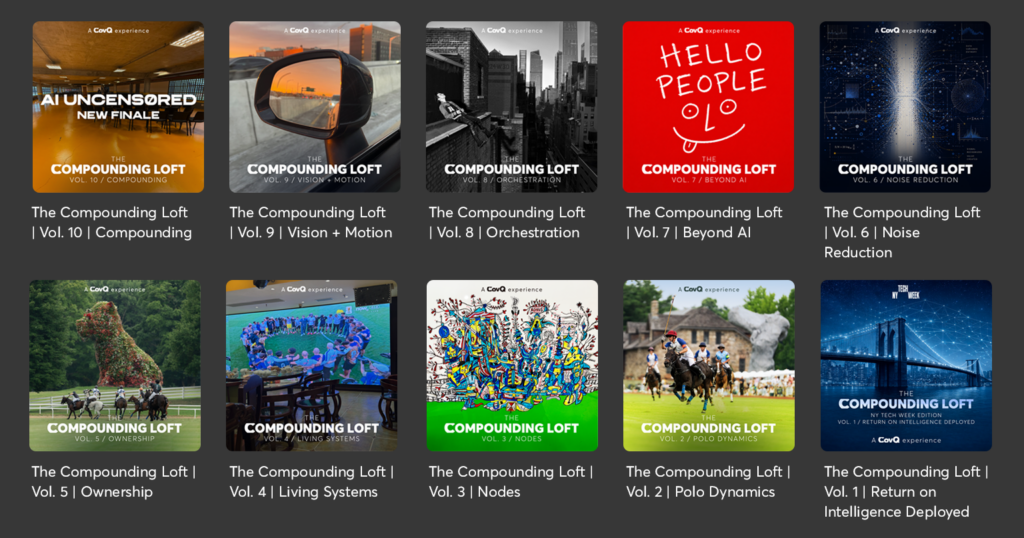
- Vol. 1 | Return on Intelligence created for NY Tech Week as part of The Compounding Loft: Return on Intelligence Deployed. The event was selected by Andreessen Horowitz (a16z) as one of the Top 10 NY Tech Week events to attend out of more than 1,500. Established the foundation: discovery balanced with familiarity, sophistication with groove, and the quality standard against which everything that followed would be judged.
- Vol. 2 | Polo Dynamics developed in connection with CovQ’s seasonal sponsorship at Greenwich Polo Club. Translated the emerging musical logic into energy, movement, galloping, and social dynamics. Photography: Courtesy of Greenwich Polo Club.
- Vol. 3 | Nodes demonstrated that coherence could come from relationships across genres, eras, and geographies rather than a single category. Artwork: Bonus Direction by Jason MacLean
- Vol. 4 | Living Systems explored recurrence, variation, and organic connection.
- Vol. 5 | Ownership widened the range of sounds and cultures while maintaining a clear identity. Photography: Courtesy of Greenwich Polo Club
- Vol. 6 | Noise Reduction used signal, space, and contrast as creative constraints while keeping quality non-negotiable. Artwork: Implicate Order by Eric Jiaju Lee, merged with a CovQ illustration.
- Vol. 7 | Beyond AI focused on the range of human creativity: futurism, emotion, humor, and experimentation.
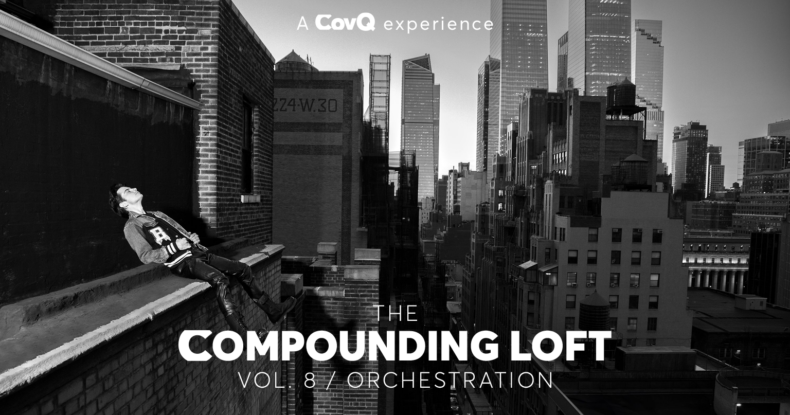
- Vol. 8 | Orchestration expanded scale through ensembles, orchestras, and global traditions, testing whether the underlying logic could survive a major stylistic reset. Artwork: Here and Now by Udo Spreitzenbarth
- Vol. 9 | Vision + Motion emphasized forward movement and momentum, bringing the collaboration to the point where the body of work itself could inform what came next.
Volume 10: Compounding
Volume 10 changed the operating model. The 450 selected tracks became the input. AI was asked to analyze the accumulated selections, infer the latent musical DNA, and search outside the corpus for 50 new tracks. The constraints remained rigorous: exactly 50 tracks, 50 different artists, no repeats from prior volumes, availability on both Spotify and Apple Music, and quality still paramount. No artificial quotas of any kind.
The first draft produced 50 tracks by 50 different artists. All 50 were new to the original corpus and were kept uncensored and unchanged.
More significant than the novelty was the economics. What had previously required substantial searching, listening, comparison, rejection, and refinement was compressed to near-zero incremental production time and cost for the initial output. Human judgment shifted to validation and final sequencing. Past work had become an asset capable of doing part of the next task.
- Vol. 10 | Compounding distilled the accumulated intelligence of the previous nine volumes into 50 new tracks by 50 new artists, without further guidance. AI inferred the underlying principles from the work that came before and applied them to something new.
From Collaboration to Compounding
The project revealed three stages:
- Collaboration: Human judgment provided direction; AI expanded discovery. The process was highly iterative.
- Accumulation: Hundreds of decisions created richer context. Selections, rejections, and sequencing all became informative. Each volume added intelligence, not just content.
- Compounding: The accumulated intelligence itself became the input. Previous high-quality judgment was made reusable, producing a new initial output at radically lower marginal effort and creating a stronger base to build from.
What This Demonstrates
The soundtrack is a music-based project, and the mechanism is not limited to music. Organizations continually make high-value judgments. When those judgments, and enough of the context around them, are captured, AI can help turn them into leverage for subsequent decisions. The opportunity is not merely to insert AI into individual tasks. It is to design systems in which high-quality decisions provide context for the next cycle of work, spirit, and culture.
That requires capturing decisions with sufficient context, preserving the logic of both selections and rejections, making accumulated intelligence accessible, and continuing to apply human judgment where it creates the most value. When that happens, the work you’ve already done starts giving you leverage.
Conclusion
The Compounding Loft project began as a creative collaboration. Across nine volumes, it produced 450 selected tracks and a far larger body of decisions, preferences, corrections, and sequencing logic. The collaboration became more informed, more efficient, and more ambitious.
Volume 10 put the accumulated intelligence to work and compounded its very core. The prior selections became the input. An initial new volume of 50 tracks by 50 new artists was produced essentially instantly. Human judgment remained essential for validation and sequencing. The economics of generating the starting point had changed.
When high-quality decisions are treated as assets and put to work rather than treated as disposable events, the next cycle of creation becomes operationalized and systematically evolves. It begins from deeper impact, and the possibilities to build value for everyone expand. Most organizations treat high-quality decisions as outputs; this project treated them as inputs, and that is the shift.
The Complete Collection
10 | 50 | 500
10 volumes, 50 hours of music, 500 tracks. One evolving system.
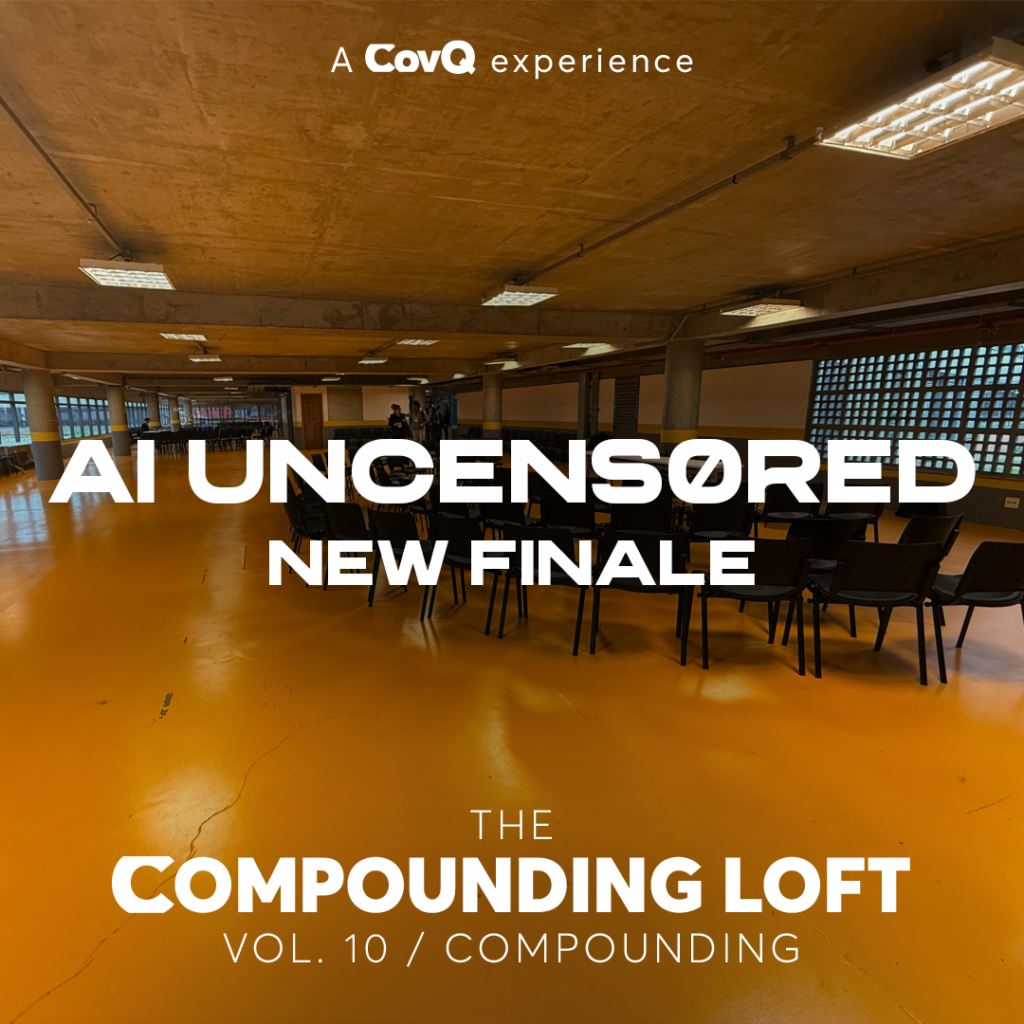
Vol. 10 | Compounding
Completed the arc. 50 new tracks by 50 new artists. Kept uncensored and unchanged.

Vol. 9 | Vision + Motion
Built entirely from film music. Forward movement and momentum.
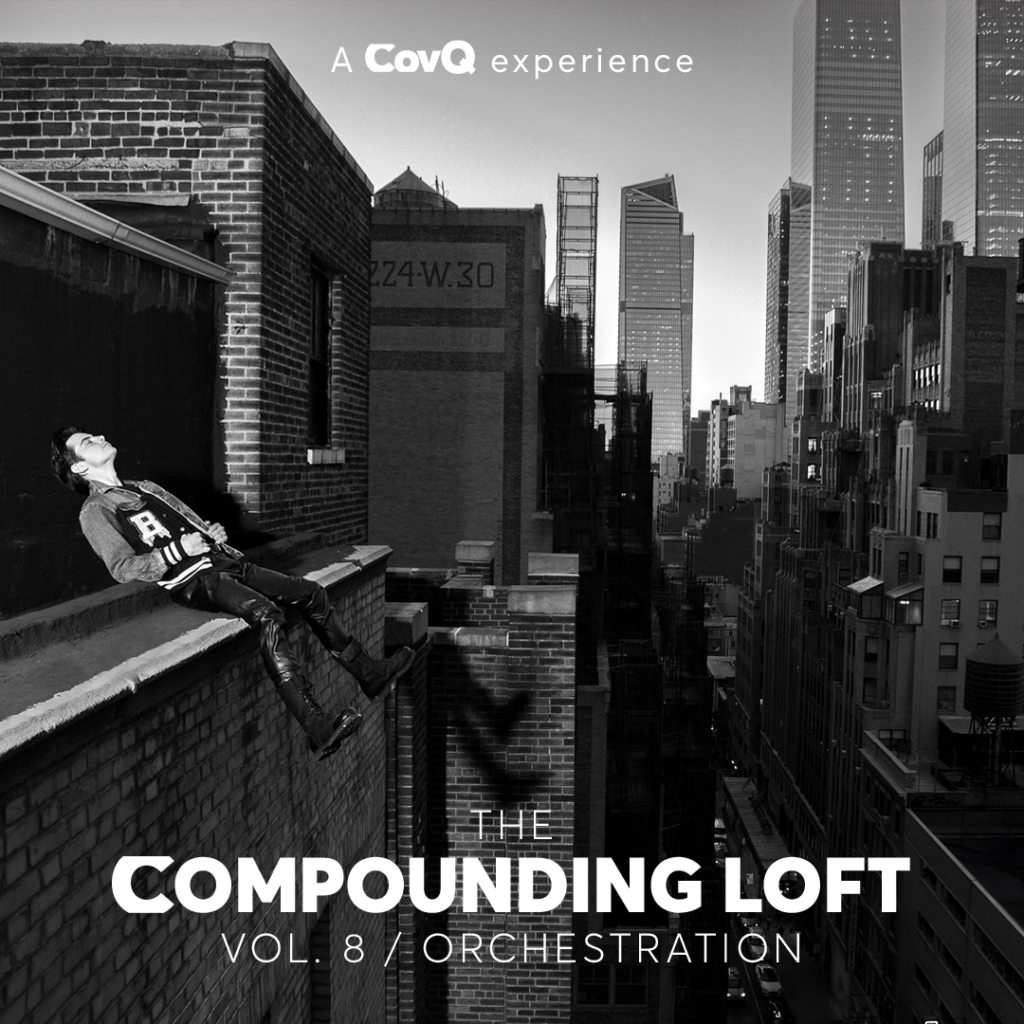
Vol. 8 | Orchestration
Orchestras, ensembles, and collaborations.
Artwork: Here and Now by Udo Spreitzenbarth
Vol. 7 | Beyond AI
Technology and human touch.
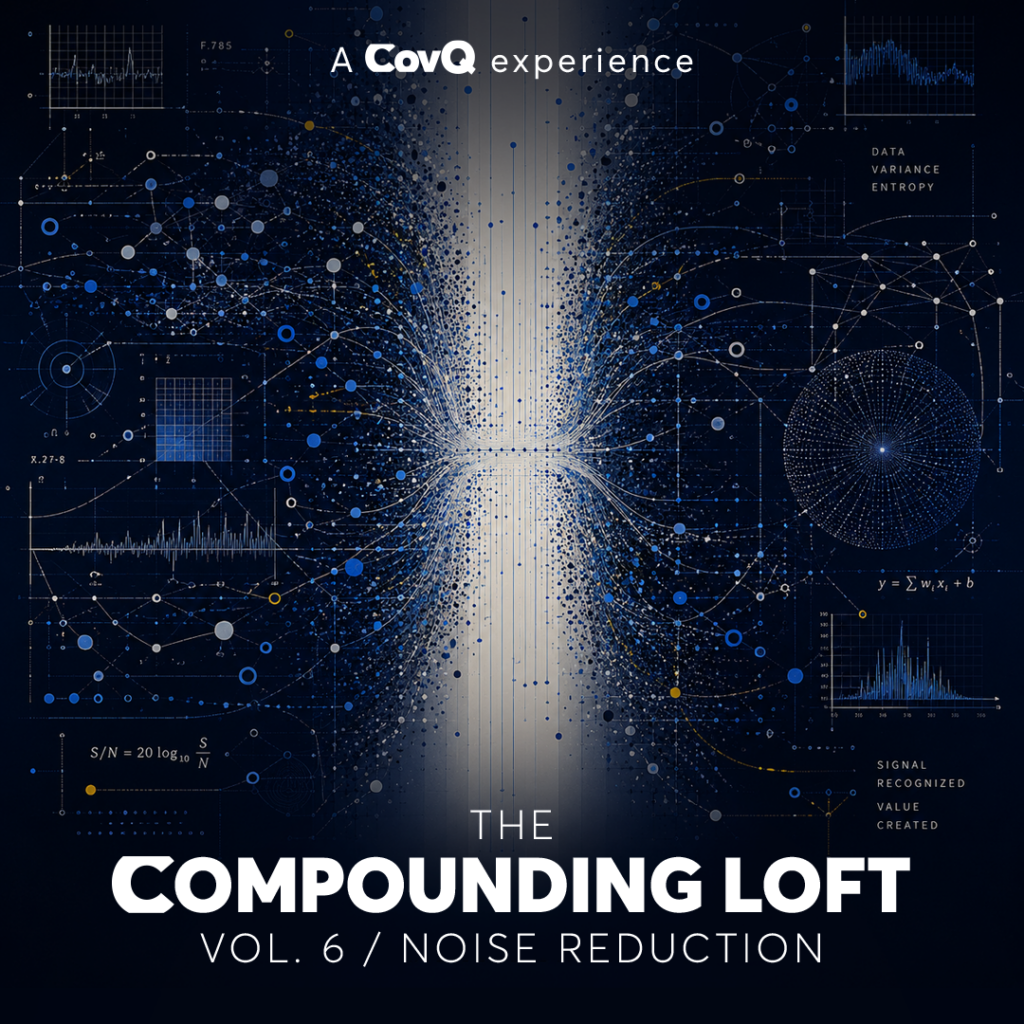
Vol. 6 | Noise Reduction
Cutting through complexity.
Artwork: Implicate Order by Eric Jiaju Lee, merged with a CovQ illustration.
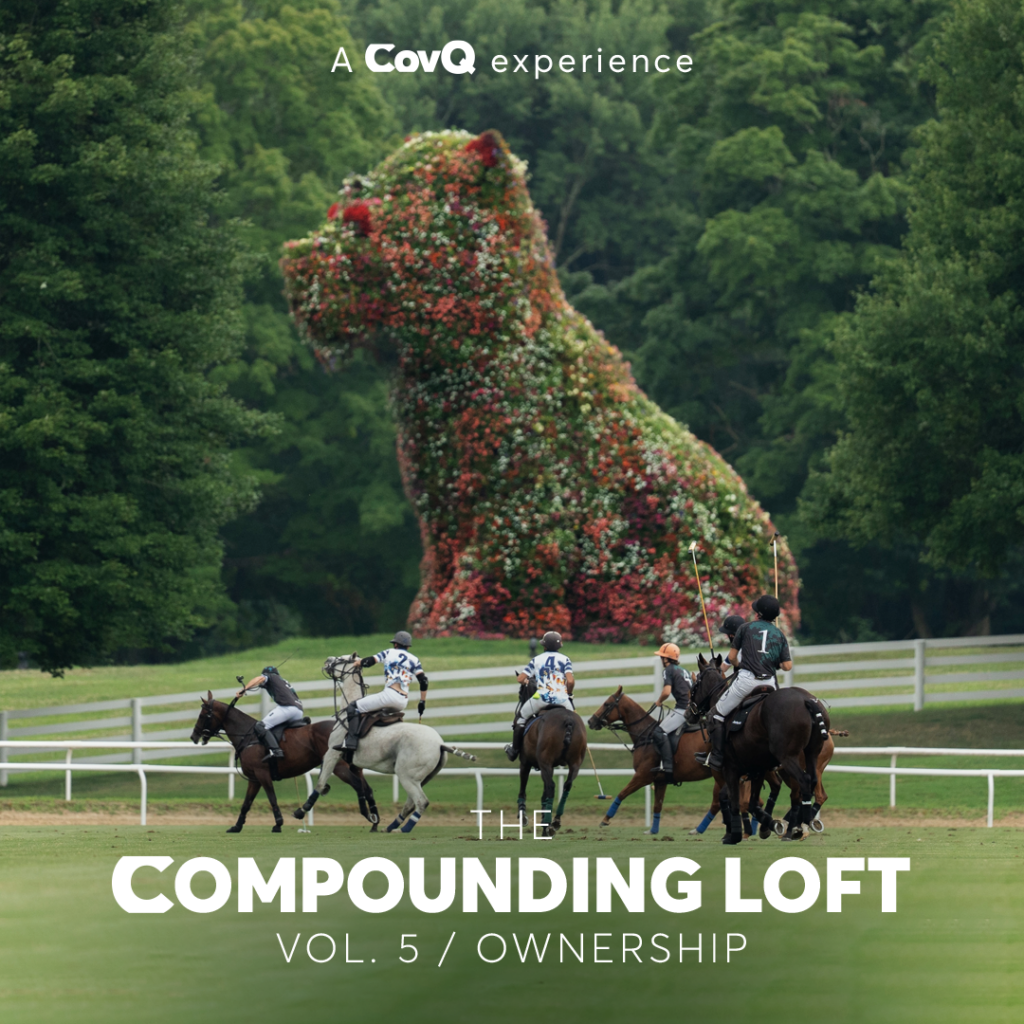
Vol. 5 | Ownership
Decisions and impact.
Photography: Courtesy of Greenwich Polo Club.
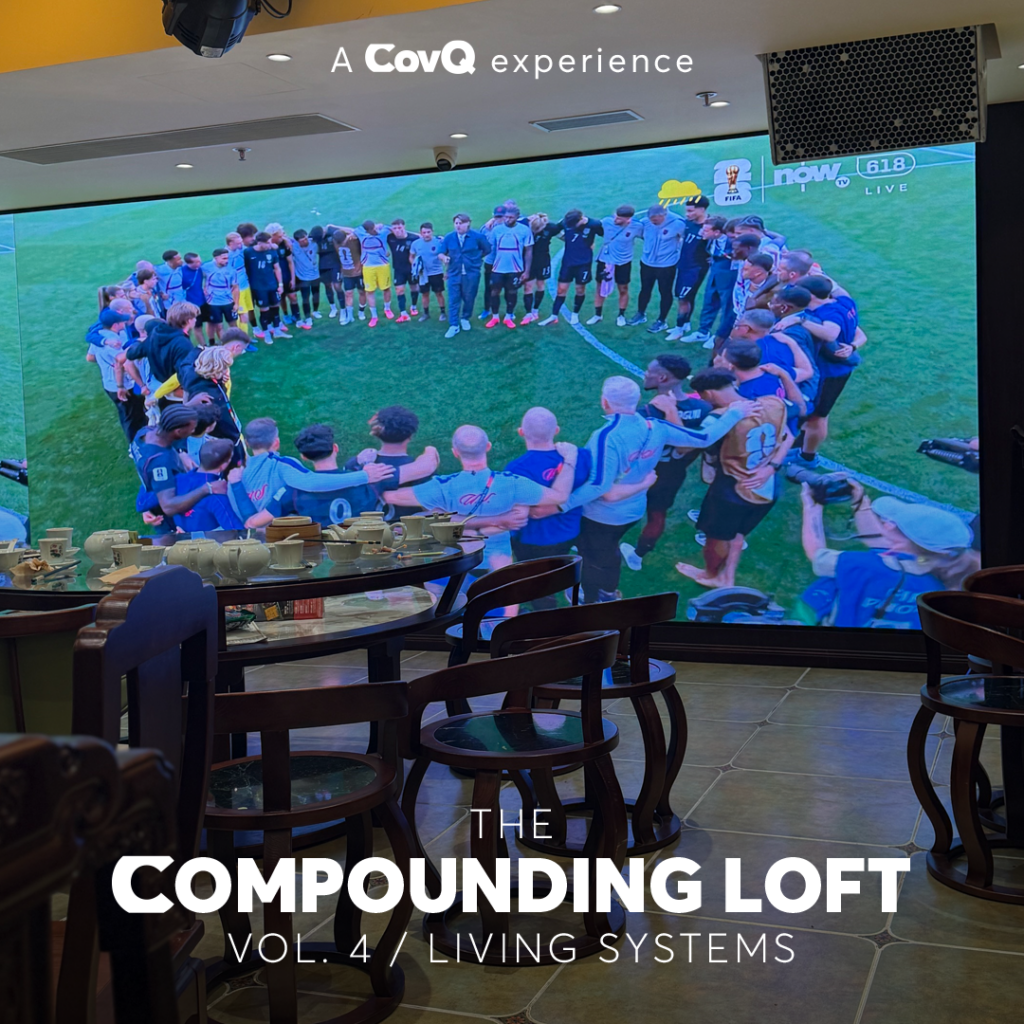
Vol. 4 | Living Systems
Integrations, dependencies, and people.
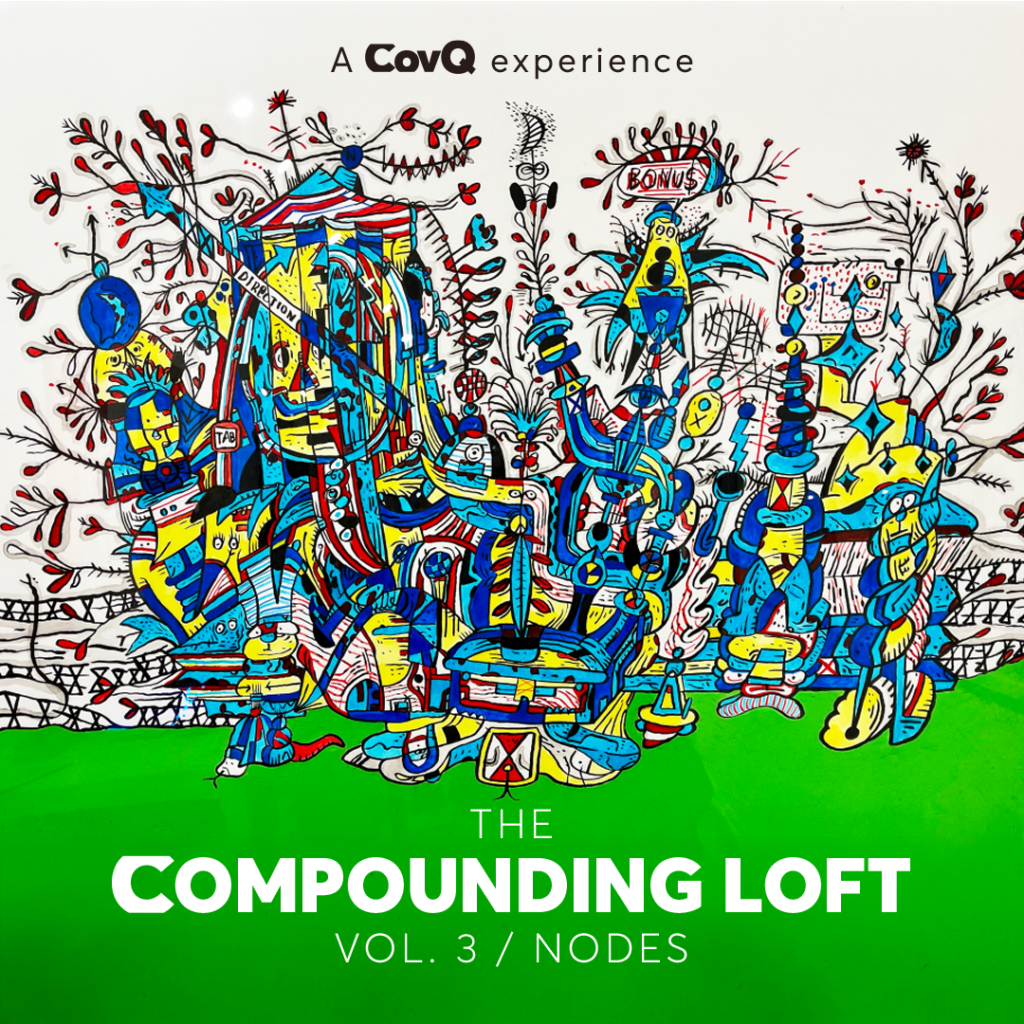
Vol. 3 | Nodes
Intersections, neuroscience, and embedment.
Artwork: Bonus Direction by Jason MacLean
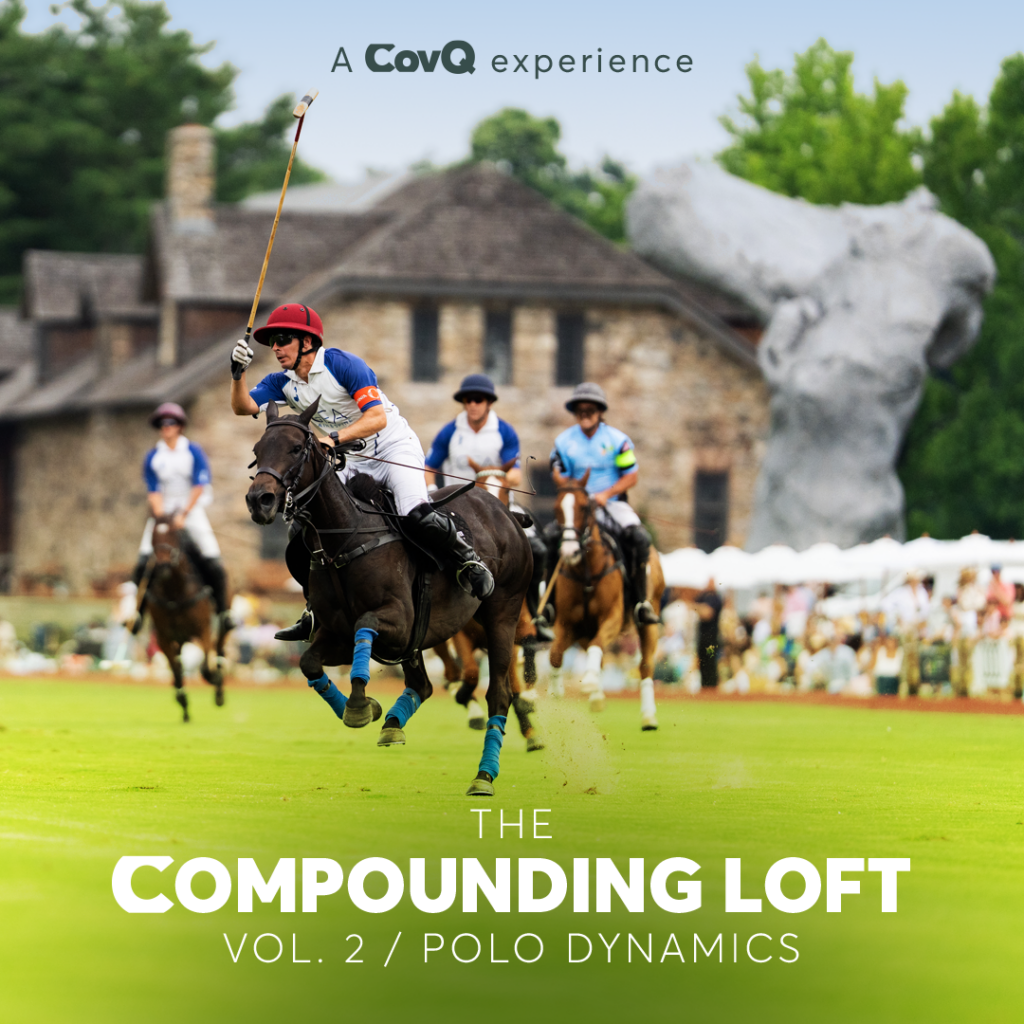
Vol. 2 | Polo Dynamics
Movement, sports, business, and social. Developed in connection with CovQ’s seasonal sponsorship at Greenwich Polo Club.
Photography: Courtesy of Greenwich Polo Club.
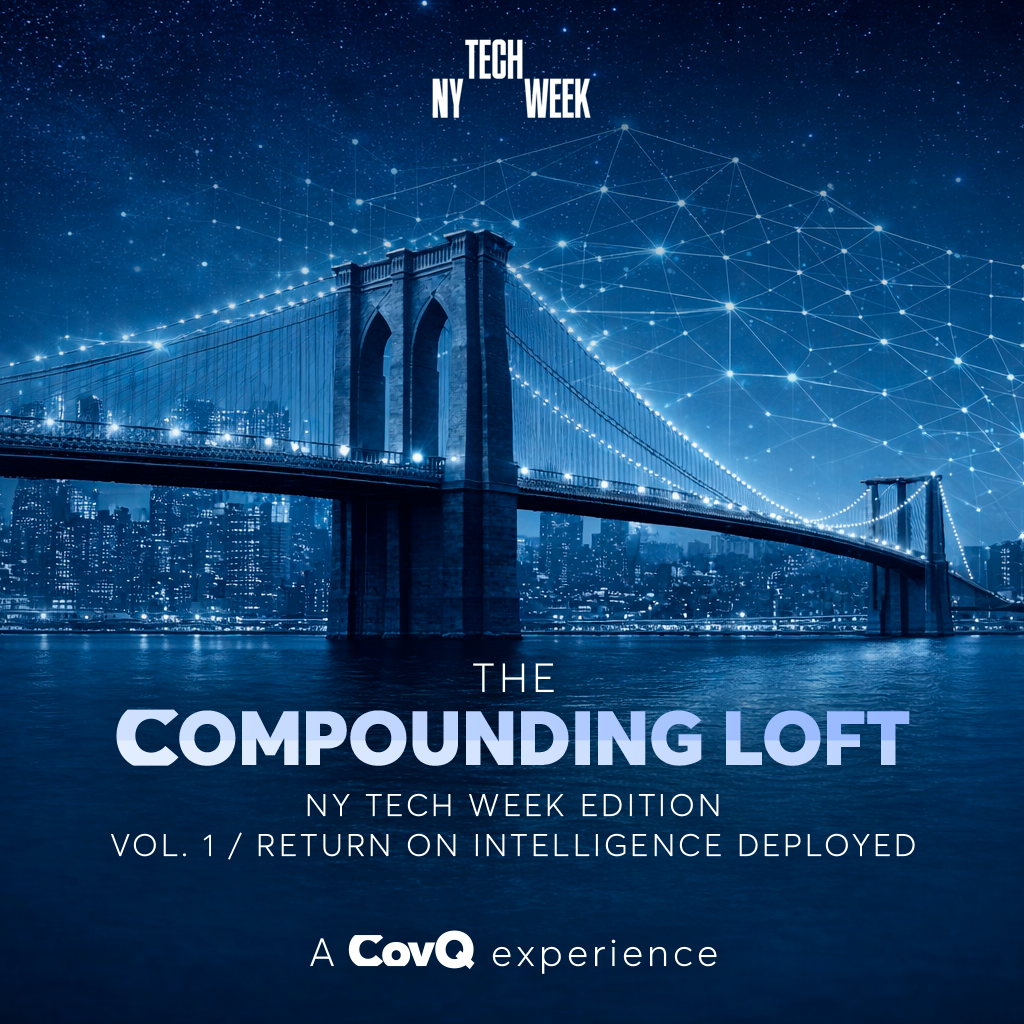
Vol. 1 | Return on Intelligence Deployed
Created for the inaugural The Compounding Loft as a CovQ NY Tech Week experience. Selected as one of the Top 10 events to attend by Andreessen Horowitz (a16z).
Listen to the full soundtracks